

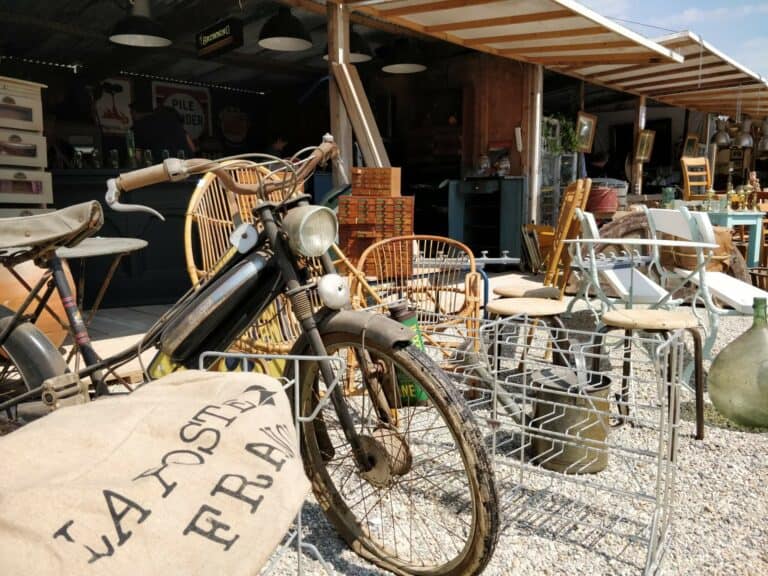

The best flea markets in France are among the most rewarding in the world — and the most varied. More than 15,000 flea markets and vide-greniers take place across the country each year. Some are massive annual events drawing two million visitors. Others are quiet Sunday brocantes in medieval village squares. In either case, visiting one is a direct encounter with everyday French culture — and frequently the best hour you will spend in any given town.
This guide covers the best flea markets in France by region: Paris, Northern France, Western France, Southern and South-Western France, and Eastern France. Each entry includes practical visitor details, dates, and links to our full reviews. Use the navigation below to jump to your region, or read straight through.
Jump to: Paris | Northern France | Western France | Southern & South-Western France | Eastern France | FAQ
You can also explore all markets on our interactive map: 90+ flea markets and antique fairs in France on Fleamapket.
Paris
Flea markets are scattered all over the French capital. You can find anything there — from authentic European antiques and classical furniture to vintage clothing and curiosities from across the former French empire. The three main flea markets in Paris are the Puces de Saint-Ouen to the north, the Puces de Vanves to the south, and the Marché de Montreuil to the east. Visiting one is as essential a part of any Paris trip as the Louvre — and considerably less crowded before 10am.
Beyond the markets themselves, Paris has rich antique neighbourhoods worth exploring: the Carré Rive Gauche on the Left Bank, and the Village Saint-Paul in the Marais, a quaint cluster of antique shops in connected courtyards. Both reward an afternoon’s exploration between market visits.
Marché aux Puces de Clignancourt (Saint-Ouen)
The Saint-Ouen flea market has a long history. Originally, the market was home to rag-and-bone men who lived outside the city’s borders — known as pêcheurs de lune (“moon fishermen”) for their habit of searching through discarded goods at night and selling them during the day. By the late 19th century, these traders had formed what is now the largest antique market in the world.
Today, the Puces de Clignancourt attracts between 120,000 and 180,000 visitors every weekend across its twelve distinct markets covering seven hectares. The scale can be disorienting on a first visit — so go straight to Rue des Rosiers, the market’s main artery. From there, the Marché Vernaison offers narrow alleyways of collectibles, kitchenware, books and table lamps, and makes an ideal first stop. If you are feeling flush, the Marché Dauphin on the same street offers upmarket jewelry and ornate antique furniture.
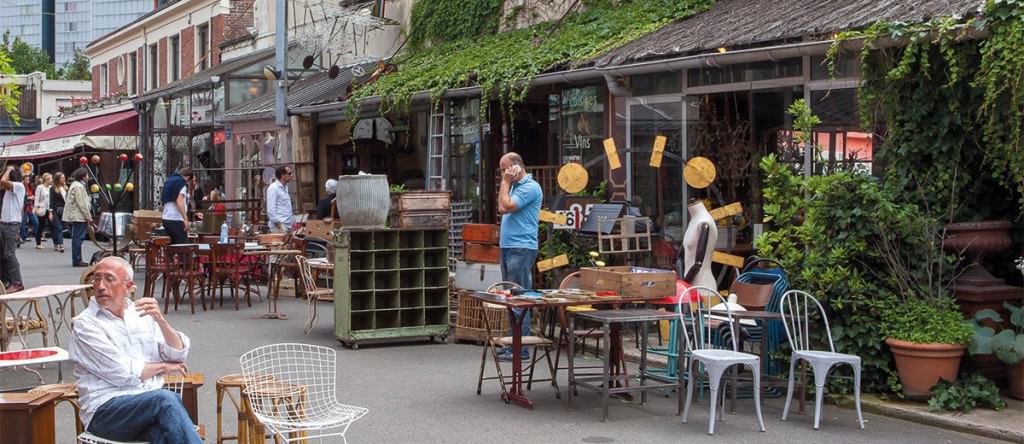
📍 Address: 140 Rue des Rosiers, 93400 Saint-Ouen
📅 Days: Saturday, Sunday, Monday
🕐 Hours: Saturday 09:00–18:00 | Sunday 10:00–18:00 | Monday 11:00–17:00
🚇 Metro: Porte de Clignancourt (line 4)
📖 Full review: Paris Saint-Ouen flea market
Puces de Vanves
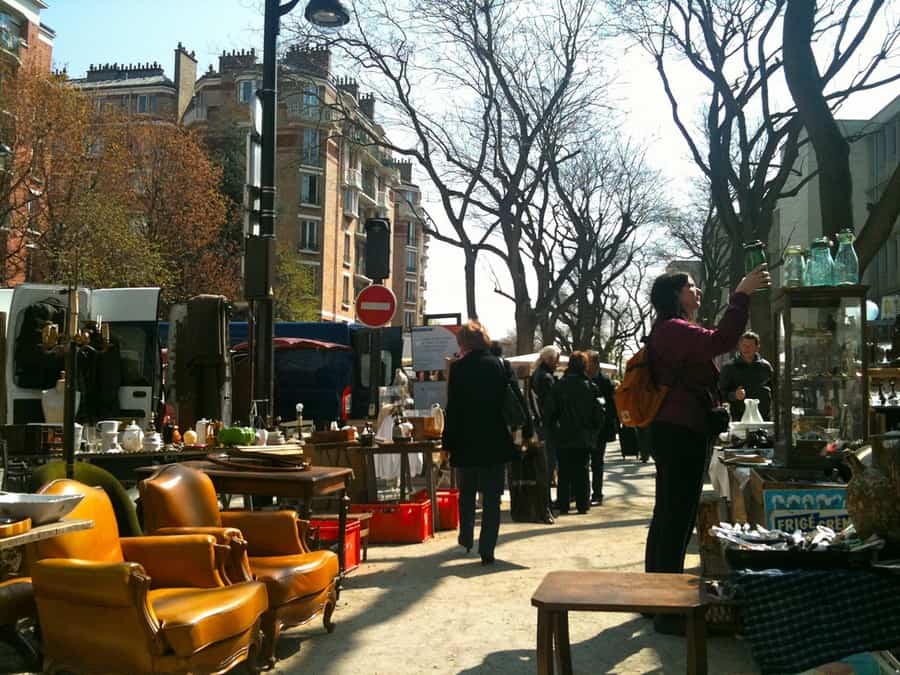
The Vanves flea market, near the Porte de Vanves metro stop, is one of the best brocantes in France. On Saturday and Sunday mornings, more than 300 vendors set up along Avenue Marc Sangnier and Avenue Georges Lafenestre until around 1pm. Some display goods attractively on tables; others pile them on blankets on the ground. Both approaches yield finds.
The range is genuinely eclectic: paintings, ceramics, silver, Art Deco objects, 1960s and 70s pieces, linens, books, militaria, kitchenware, vintage clothing. Prices run the full gamut. Vanves is not the most scenic market in Paris — however, it is the one for people who are there to buy rather than sightsee, and regulars know it often outperforms Saint-Ouen for quality-to-price ratio.
📍 Address: Ave Marc Sangnier & Ave Georges Lafenestre, 14th arrondissement
📅 Days: Saturday and Sunday
🕐 Hours: 07:00–13:00
🚇 Metro: Porte de Vanves (line 13)
📖 Full review: Puces de Vanves flea market
Marché de Montreuil
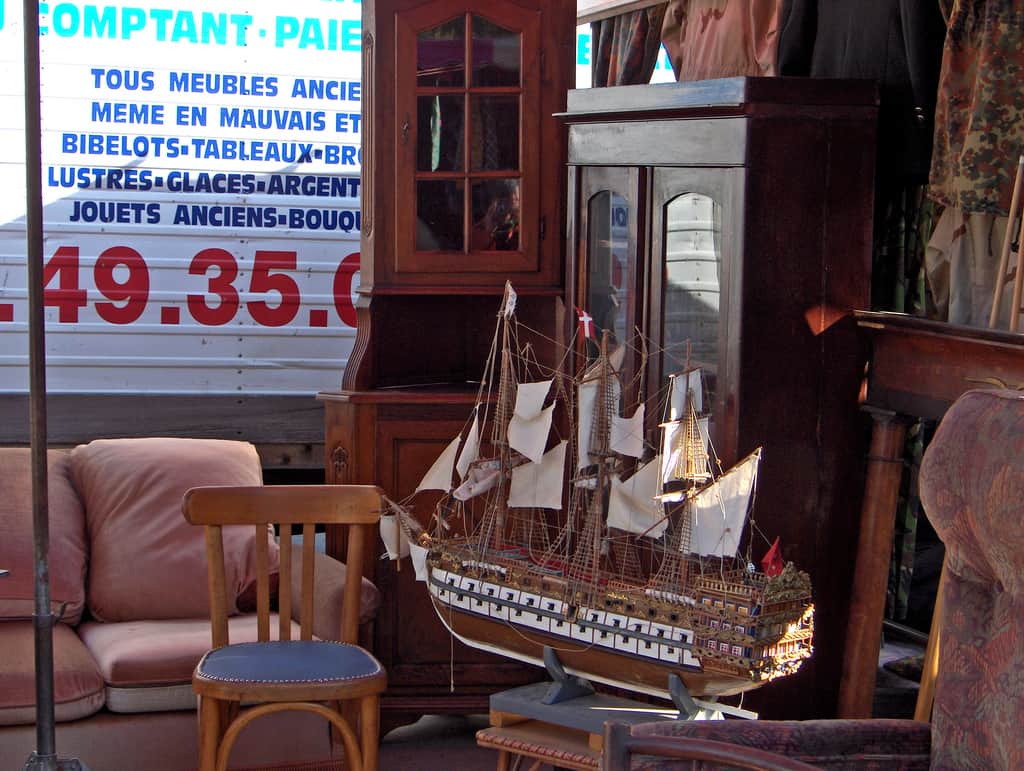
Established in the 19th century, the Montreuil flea market is one of the oldest in Paris and still carries the atmosphere of a traditional brocante. Around 500 stalls spread across the Porte de Montreuil, and it is widely considered the best place in Paris to find pre-loved clothing — vintage fashion, faded but distinctive jewelry, and the kind of slightly rumpled clothing that has already lived a life.
Montreuil is not the right destination for high-end antiques. However, for second-hand items, vintage finds, and the particular pleasure of a market that feels genuinely local rather than curated for tourists, it delivers consistently.
📍 Address: Avenue du Professeur André Lemierre / Place de la Porte de Montreuil, 75020 Paris
📅 Days: Saturday, Sunday, Monday
🕐 Hours: 07:00–19:30
🚇 Metro: Porte de Montreuil (line 9)
📖 More info: All Paris flea markets
Book Your Stay in Paris
Paris markets open early and the best pieces move fast. Staying centrally puts you at the Vanves gates at 7am without a commute — which is when the serious buyers are already there.
Northern France
Northern France — the Hauts-de-France region — is home to some of the most significant flea market events in Europe, anchored by the Grande Braderie de Lille. The region’s Flemish heritage runs through its markets: a taste for quality antiques, a tradition of outdoor trading, and a straightforwardness in negotiation that visitors from further south sometimes find refreshing.
La Grande Braderie de Lille
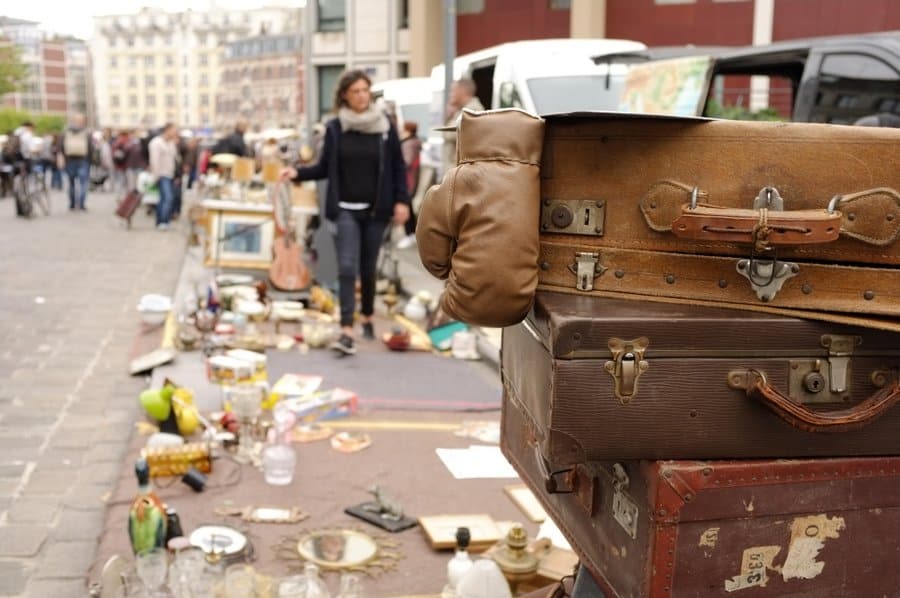
The Grande Braderie de Lille is the largest flea market in Europe — and one of the oldest street fairs in the world. Every first weekend of September, the entire city of Lille becomes a 100-kilometre open-air market with around 10,000 vendors and close to two million visitors. The event dates to 1127, when it was first recorded as the Franche Foire.
The market divides naturally into two zones. The smaller boulevards host non-professional vendors selling vintage furniture, clothing, records and books at negotiable prices. The larger arteries — Boulevard Louis XIV and Boulevard de la Liberté — concentrate professional antique dealers. Among them, a significant contingent of British specialists cross the Channel specifically for this event. Go to the professional zone first; the general sections are best explored once you have covered the antique itinerary.
The moules-frites tradition is real and mandatory. Restaurants along the route compete to build the tallest pile of empty shells — over 500 tonnes of mussels were consumed in 2025 alone.
📍 Where: Lille city centre
📅 When: First weekend of September (2026: Saturday 5 – Sunday 6 September)
🕐 Hours: Saturday 08:00 to Sunday 18:00 (34 hours non-stop)
📖 Full review: Grande Braderie de Lille
La Réderie d’Amiens
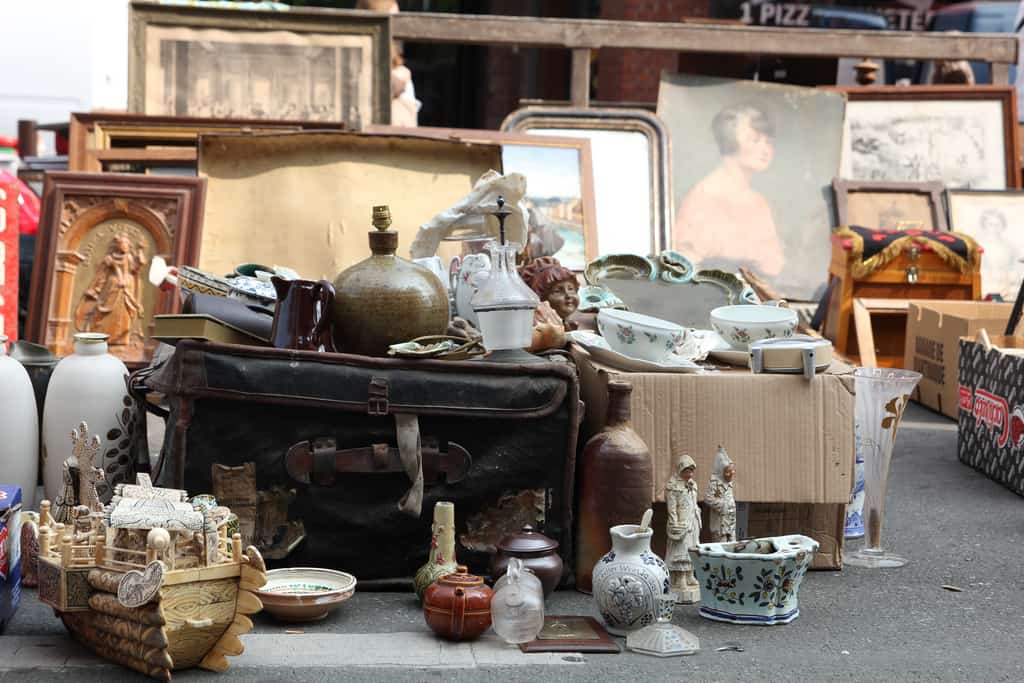
After the Braderie de Lille, the Réderie d’Amiens is the third-largest flea market event in France. Held twice a year — on the third Sunday of April and the first Sunday of October — it welcomes more than 500 professional dealers and 2,000 casual traders from across the country, spread across 51 streets in the city centre. Between 80,000 and 100,000 visitors attend each edition.
📍 Where: Amiens city centre, 80000 Amiens
📅 When: 3rd Sunday of April and 1st Sunday of October
📖 Full review: Réderie d’Amiens
Foire aux Puces de Crèvecœur-le-Grand
Less famous than the Braderie de Lille, the Foire aux Puces de Crèvecœur-le-Grand is nonetheless the third-largest flea market in northern France. Held once a year on Ascension Day, it welcomes over 2,200 exhibitors — of whom nearly 70% are professional antique dealers — and around 40,000 visitors from across northern Europe.
That proportion of professional dealers is what sets Crèvecœur apart. Antique enthusiasts come from the UK, the Netherlands, Belgium and Germany specifically to find objects the French market no longer values as highly: old clocks, linen, glassware, and 19th-century furniture. As a result, the quality floor here is higher than at most comparable events.
📍 Where: Crèvecœur-le-Grand, 60360 France
📅 When: Ascension Day (40th day after Easter)
📖 Full review: Foire aux Puces de Crèvecœur-le-Grand
Brocante de Maroilles
Twenty miles from the Belgian border and an hour from Lille, Maroilles is a small village known primarily for its pungent cheese. Once a year in June, however, it becomes a significant destination. The Brocante de Maroilles draws over 600 exhibitors and 80,000 visitors — including buyers from the UK, the Netherlands and Denmark — for what is effectively a strictly curated antique fair.
The rules are enforced seriously: only antique and second-hand dealers are permitted to sell, and 30 commissioners monitor the event throughout to ensure that only genuine antiques and vintage merchandise change hands. That discipline produces a quality of stock that casual flea markets rarely match.
📍 Where: Grande Rue, Maroilles, 59550
📅 When: 3rd Sunday of June
📖 Full review: Brocante de Maroilles
Book Your Stay in Northern France
Lille fills up months before the Braderie. Book early — and if the city is full, Arras (30 minutes by train) and Brussels (1h30) are both realistic alternatives with direct rail connections.
Western France
Western France — Brittany, the Loire Valley, and the Atlantic coast — offers some of the most scenically rewarding flea market experiences in the country. The Loire châteaux provide spectacular backdrops; the Breton coast brings nautical curiosities; the smaller city markets combine quality with accessibility by TGV from Paris.
La Braderie du Canal Saint-Martin, Rennes
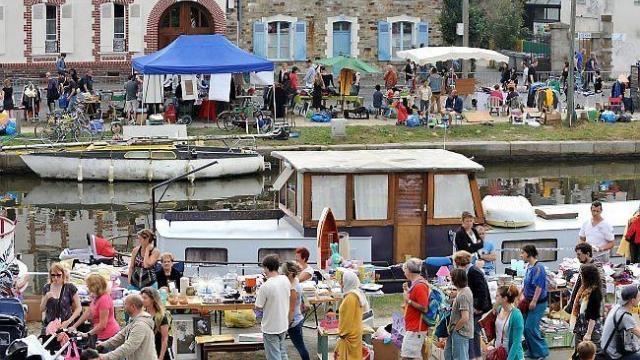
The second-largest flea market event in France after the Braderie de Lille, La Braderie du Canal Saint-Martin in Rennes gathers more than 3,500 exhibitors and 150,000 visitors on the third Sunday of September each year. It runs for one day only along the Canal Saint-Martin, offering a pleasant river walk alongside the browsing.
The focus is broad: vintage toys, old coins, stamps, clothing, rare decorative objects, fashion accessories, and general bric-a-brac. It has the character of a very large, well-attended garage sale rather than a curated antique fair — which is precisely what makes it enjoyable for visitors who find the professional markets slightly intimidating.
📍 Where: Canal Saint-Martin, Rennes
📅 When: 3rd Sunday of September
📖 Full review: Braderie du Canal Saint-Martin
Brocante de Durtal
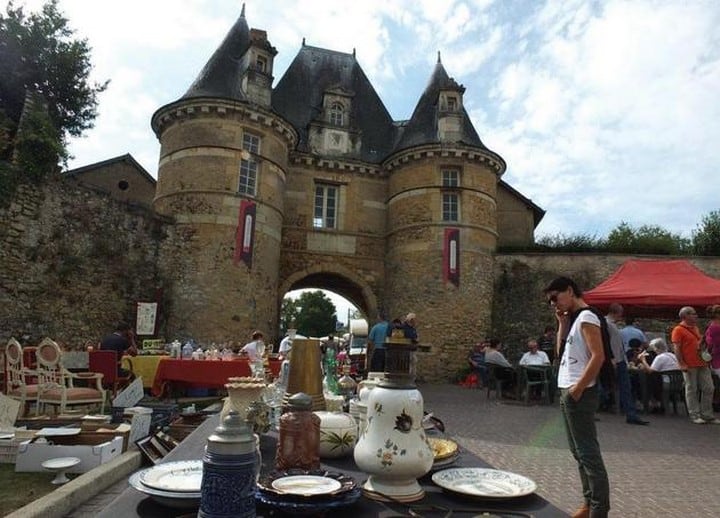
The Rendez-vous international de la Curiosité et de la Brocante de Durtal spreads along the walls of Durtal’s castle — one of the last outdoor antique fairs of this scale and quality in western France. Around 450 exhibitors and 20,000 visitors gather for 14 hours on the second full Sunday of September. The stock skews consistently toward quality: rare coins, old books, silverware, crockery, clothing, jewelry, ceramics, porcelain, furniture, and paintings.
Collectors and professionals travel from across France and neighbouring countries. The setting — medieval castle, stone streets, the antique fair winding through both — makes it one of the more memorable market experiences in the country.
📍 Where: Durtal city centre
📅 When: 2nd full Sunday of September, 05:00–19:00
📖 Full review: Brocante de Durtal
Grande Brocante de Chambord
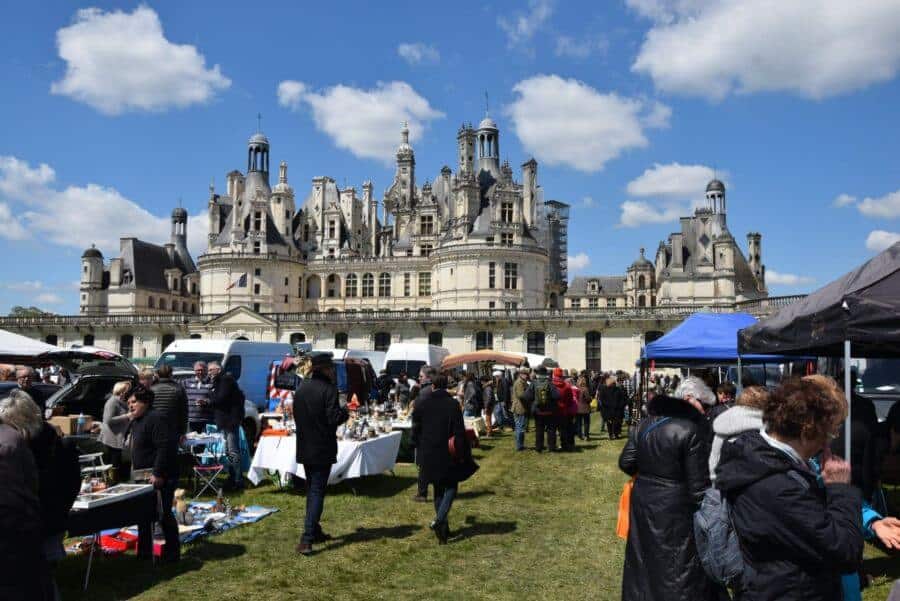
The Grande Brocante de Chambord takes place every 1st of May on the grounds of the Château de Chambord — the largest of all Loire Valley châteaux. Nearly 500 exhibitors from France and across Europe set up across five kilometres of alleys in the castle’s village and on the southern parterre, attracting over 50,000 visitors.
The range spans antique furniture and heirloom oil paintings to gramophones, vintage clothing, antique cameras, tools, and kitchenware. Prices are competitive — which makes the 170km drive from Paris worthwhile. As a May Day event it also benefits from good weather odds, and the Chambord setting does most of the work before a single stall opens.
📍 Where: Château de Chambord
📅 When: 1 May each year, 04:00–17:00
📖 Full review: Grande Brocante de Chambord
Tours Flea Market: Brocante Boulevard Béranger
Tours — the “Garden of France” — hosts a monthly brocante along Boulevard Béranger with around 150 stalls of fine French porcelain, books, furniture, antique bottles, and agricultural equipment. Only professional antique dealers are permitted to sell, which keeps the quality standard consistent.
Tours is just over an hour from Paris by TGV, making it perfectly viable as a day trip. That said, the city itself — its architecture, botanical gardens, and surrounding vineyards — rewards a longer stay.
📍 Where: Boulevard Béranger, Tours
📅 When: 4th Sunday of the month (except December), 07:00–19:00
Nantes Flea Market: Brocante Place Viarme
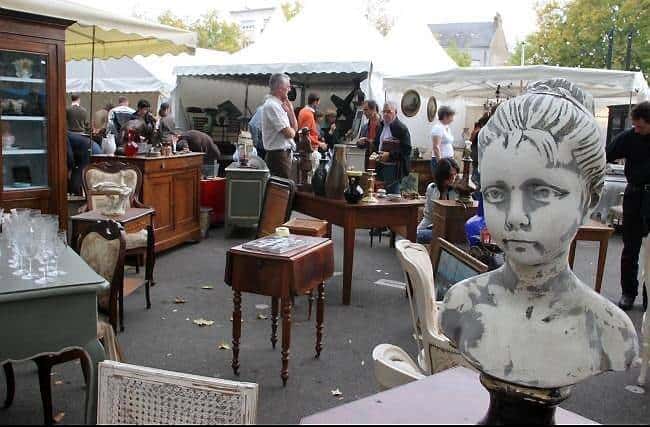
The Place Viarme’s weekly flea market in Nantes runs 120 stalls every Saturday morning. The coastal location makes it a natural source for vintage nautical items alongside more typical finds — books, postcards, pottery, porcelain, and local Quimper ceramics. Twice a year (spring and autumn), the square hosts the Grande Brocante de la Place Viarme, a three-day event with over 160 professional dealers.
📍 Where: Place Viarme, Nantes (Tram 1 to Commerce, then Tram 3 to Viarme-Talensac)
📅 When: Every Saturday 08:00–13:00 | Grande Brocante: spring (May) and autumn (September/October)
Book Your Stay in Western France
The Loire Valley and Brittany reward slow travel. A base in Tours or Nantes puts you within reach of several markets across consecutive weekends without doubling back.
Southern and South-Western France
The south of France has its own flea market culture — slower, more sun-drenched, and deeply tied to Provençal and Languedoc traditions. The best markets here feel like extensions of their towns rather than events grafted onto them. Isle-sur-la-Sorgue has built an international antique reputation over fifty years. Arles fits its monthly brocante into the rhythm of a city that has always been a trading centre. Even the smaller markets carry a sense of place.
Toulouse: Brocante Saint Aubin
Every Saturday morning, as many as 70 professional vendors gather under the trees of Boulevard Michelet around the Basilica Saint Aubin in Toulouse for the Brocante Saint Aubin. The market runs from 6am to 1:30pm and specialises in items from the 1930s to the 1980s: vintage furniture, old books, 1950s posters, ornaments, wrought iron, old linen, and assorted rarities.
Toulouse itself — La Ville Rose, with its distinctive pink medieval brick — is an underrated destination. La Cité de L’espace, the space exploration theme park on the city’s outskirts, is worth an afternoon if you have children in tow.
📍 Where: Place Saint Aubin, Boulevard Michelet, 31000 Toulouse
📅 When: Every Saturday, 06:00–13:30
📖 Full review: Brocante Saint Aubin
Grande Foire à la Brocante de Pézenas
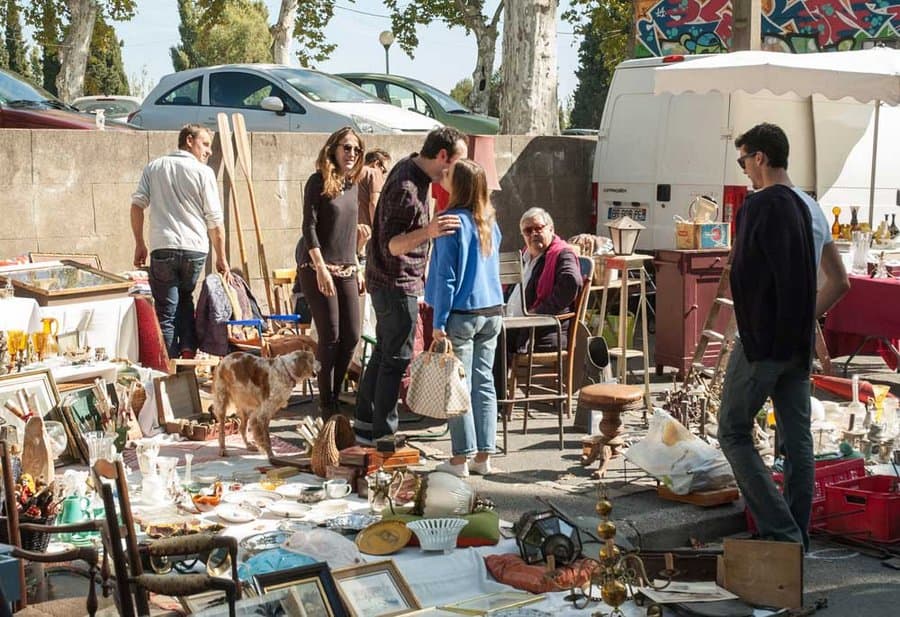
Pézenas sits between the Mediterranean and the Haut Languedoc. Around 50 resident antique dealers operate in town year-round across 8,000 square metres of showrooms. Twice a year, at the Grand Déballage (“the Grand Unpacking”), more than 150 merchants line the Route Nationale 113 for two kilometres of antique furniture, jewelry, dishes, silverware, weapons, musical instruments, paintings, African art, watches, books, and curiosities.
For serious antique buyers in the south, this is one of the most productive events in the calendar. The town’s permanent dealer presence means quality standards are maintained even outside the fair dates.
📍 Where: Route des antiquaires – R.N. 113, Pézenas
📅 When: 1st Sunday of May and 2nd Sunday of October, 08:00–18:00
📖 Full review: Grand Déballage de Pézenas
Arles Flea Market
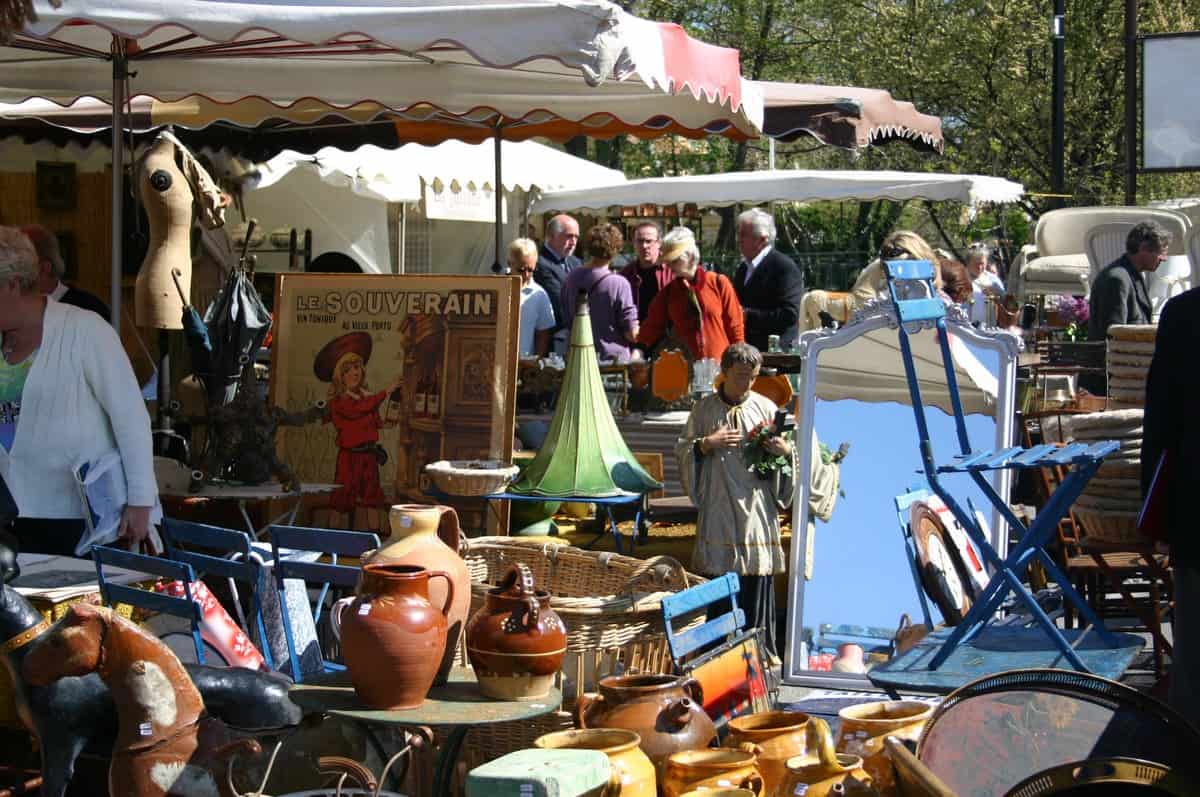
On the first Wednesday of each month, the brocante d’Arles stretches along the tree-lined Boulevard des Lices between 80 and 100 professional dealers. Many vendors rotate between Arles, Isle-sur-la-Sorgue, Villeneuve-lès-Avignon, Pézenas, and Nîmes — so the stock stays fresh rather than accumulating.
Best buys lean Provençal: richly coloured indiennes (traditional Provençal fabrics), antique local pottery, and santons (the traditional clay figures). Beyond that, expect old furniture, paintings, books, postcards, jewelry, faïence, wrought iron, and trinkets that carry the particular character of the region.
📍 Where: Boulevard des Lices, Arles
📅 When: 1st Wednesday of the month, 08:00–16:00
📖 Full review: Arles flea market
Brocante de Villeneuve-lès-Avignon
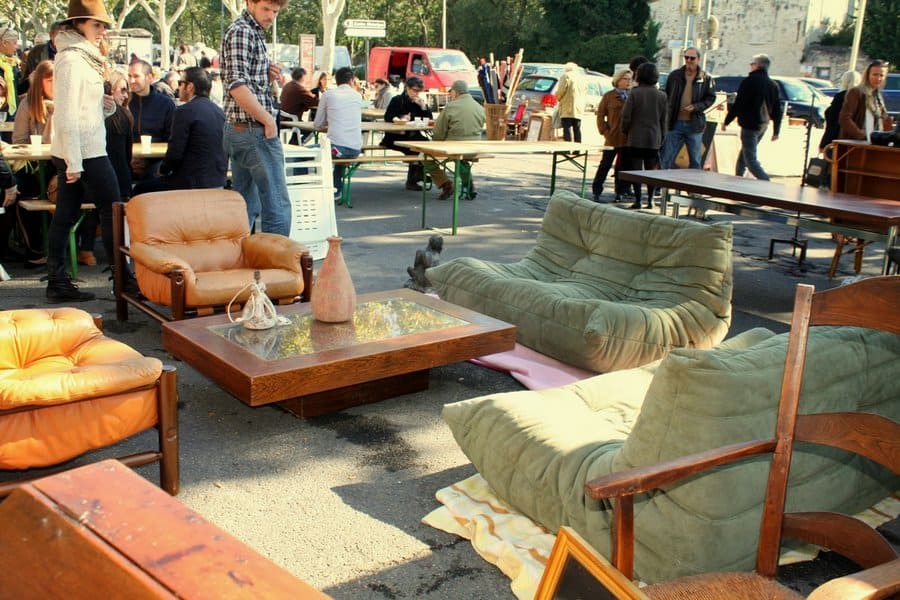
Against the backdrop of the 14th-century Fort Saint André, the brocante de Villeneuve-lès-Avignon runs every Saturday of the year with between 80 and 100 professional exhibitors. The focus is Provençal: antique pottery, ceramics, crystal, glassware, wine and barrel-making tools, silverware, small and large furniture, toys, and kitchenware.

Even on cold November mornings when the Mistral blows, the most serious antique dealers in Provence show up well before dawn to snap up the best stock. That tells you what you need to know about the quality of what’s on offer.
📍 Where: Villeneuve-lès-Avignon
📅 When: Every Saturday, 06:00–15:00
📖 Full review: Brocante de Villeneuve-lès-Avignon
Foire de l’Isle-sur-la-Sorgue
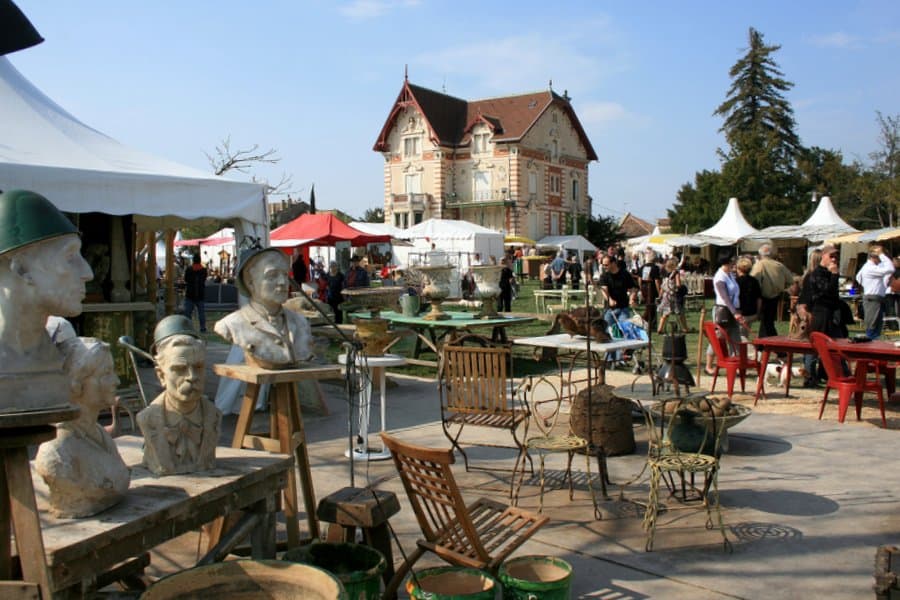
Isle-sur-la-Sorgue, 25km east of Avignon, has become the antique capital of southern France over the past fifty years. Nearly 300 permanent antique dealers operate in town year-round — the largest concentration of antique shops in France outside Paris. The town itself is one of the most pleasant places to spend a browsing afternoon in Provence: small bridges, narrow ancient streets, old waterwheels on the Sorgue river, cafés and shops.
Twice a year, at the international antique fair over the Easter weekend and the 15 August weekend, over 450 exhibitors join the permanent dealers. The fair has operated since 1966 and ranks among the biggest antique events in Europe. Expect antique furniture, Provençal boutis, ceramics, rare finds, and collectibles from across the south — along with 120,000 other visitors.
📍 Where: Isle-sur-la-Sorgue, 84800
📅 When: Easter weekend and 15 August weekend, 09:00–19:00
📖 Full review: Isle-sur-la-Sorgue antique fair
Brocante de Carpentras
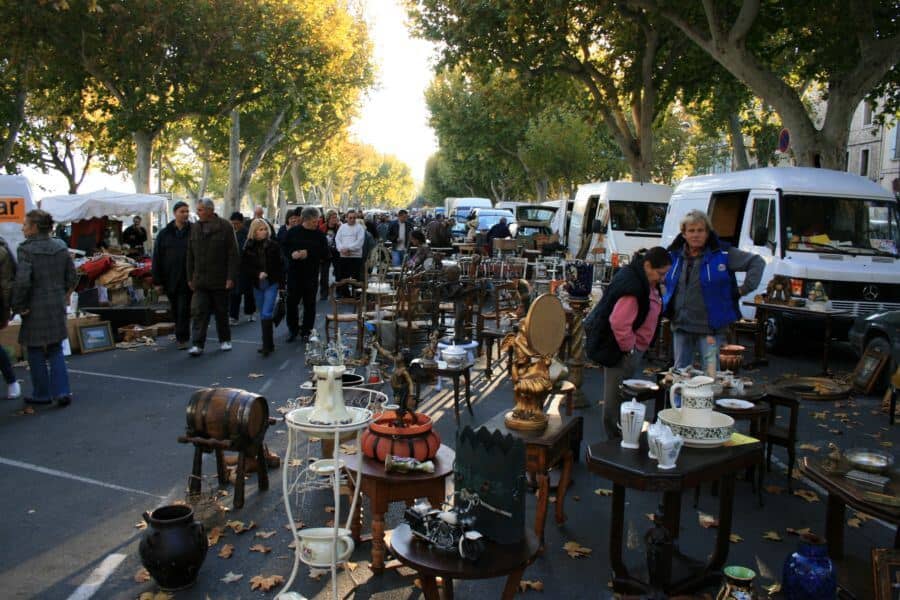
Every Sunday, the Brocante de Carpentras gathers 130 to 150 vendors in a tree-lined parking lot north of Avignon. It sits somewhere between a full brocante and a vide-grenier — many vendors are private individuals rather than professional dealers. Prices are consequently lower than at Isle-sur-la-Sorgue or Villeneuve-lès-Avignon, and the variety is wide. For the patient browser willing to invest time, it regularly rewards.
📍 Where: Parking des Platanes, Avenue Jean-Jaurès, Carpentras
📅 When: Every Sunday (year-round), 09:00–18:00
Nice Flea Market: Brocante Saleya
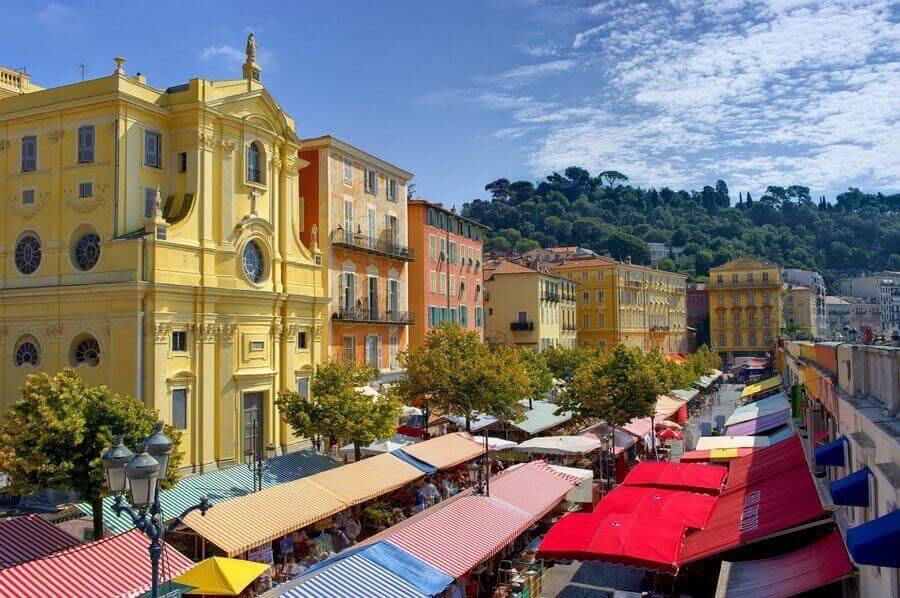
Every Monday, the Cours Saleya hosts the Brocante Saleya with around 200 vendors. Nice’s colourful open-air square sits just behind the Promenade des Anglais, and the quality level is reasonably high: antique furniture, vintage clothing, posters, silverware, nautical items, ceramics, paintings, old photographs and postcards, vintage toys, and jewelry. In the adjacent Place Pierre Gauthier, moreover, odds and ends are piled directly on the ground for determined bargain hunters.
Several vendors speak English and Italian, reflecting the market’s genuinely international crowd. As much a people-watching occasion as a shopping one.
📍 Where: Cours Saleya, 06300 Nice
📅 When: Every Monday, 07:00–18:00
📖 Full review: Brocante Saleya
Book Your Stay in Southern France
The Provence markets cluster conveniently: a base near Avignon puts you within 30 minutes of Villeneuve-lès-Avignon, Isle-sur-la-Sorgue, Carpentras and Arles — four markets, four different characters, all reachable in one long weekend.
Eastern France
Eastern France — Lyon, the Alps, Alsace, and Franche-Comté — has a flea market culture shaped by its proximity to Switzerland, Germany, and Italy. The markets here tend toward quality over volume, with a particular strength in regional specialities: Alsatian ceramics, Alpine woodware, Savoyard implements. Lyon’s weekly Puces du Canal is one of the best regular flea markets in the country.
Lyon Flea Market: Les Puces du Canal
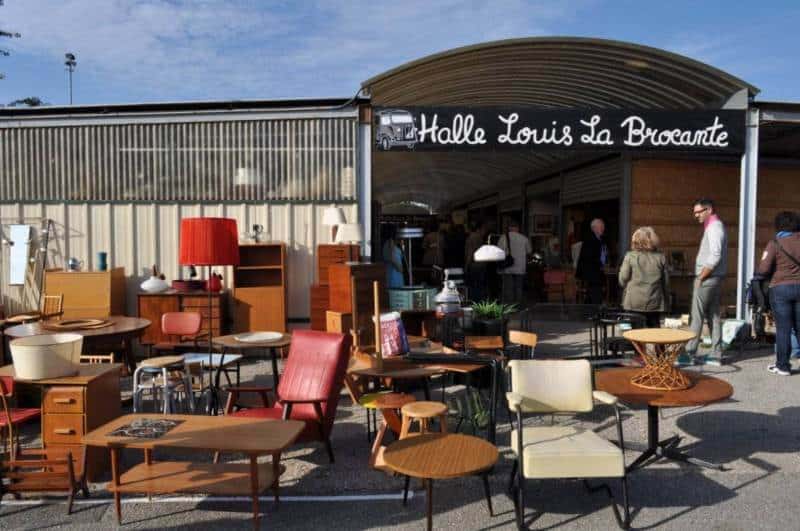
France’s gastronomic capital has a flea market scene to match its culinary one. Les Puces du Canal in Villeurbanne gathers around 400 vendors three days a week. It is considered the second-biggest weekly flea market in France after Saint-Ouen, with a focus on design, retro, and vintage — old furniture, vintage decor, and the kind of eclectic objects that make it one of the best regular markets in the country.
On Thursdays and Saturdays, only professional stallholders are permitted. On Sundays, the public joins in — producing a more unpredictable and often more rewarding mix. The setting is industrial rather than scenic, but the stock more than compensates.
📍 Where: 1 rue du Canal, Villeurbanne
📅 When: Thursday 07:00–13:00 | Saturday 09:00–12:00 | Sunday 07:00–15:00
📖 Full review: Les Puces du Canal
Annecy Vieux Quartier Flea Market
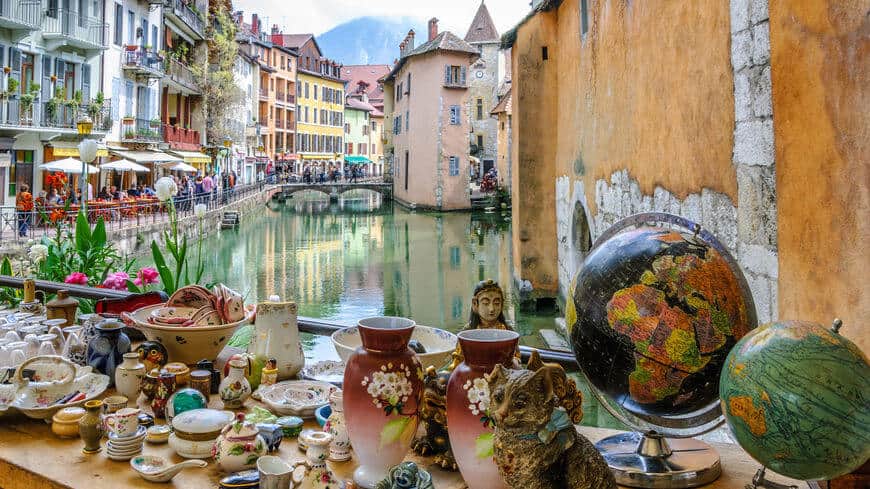
The monthly flea market in Annecy’s old town gathers between 150 and 200 professional vendors in one of the most scenic settings of any market in France. Medieval alleyways, canals, stone bridges, and the château above provide the backdrop. The stock reflects the city’s position as a gateway to the Alps: vintage snowshoes and skis, Savoyard cheese-making equipment, boxes of cowbells — alongside more conventional antiques like paintings, pottery, and furniture.
📍 Where: Vieille ville, 74000 Annecy
📅 When: Last Saturday of the month, 08:00–18:00
Brocante de Belfort
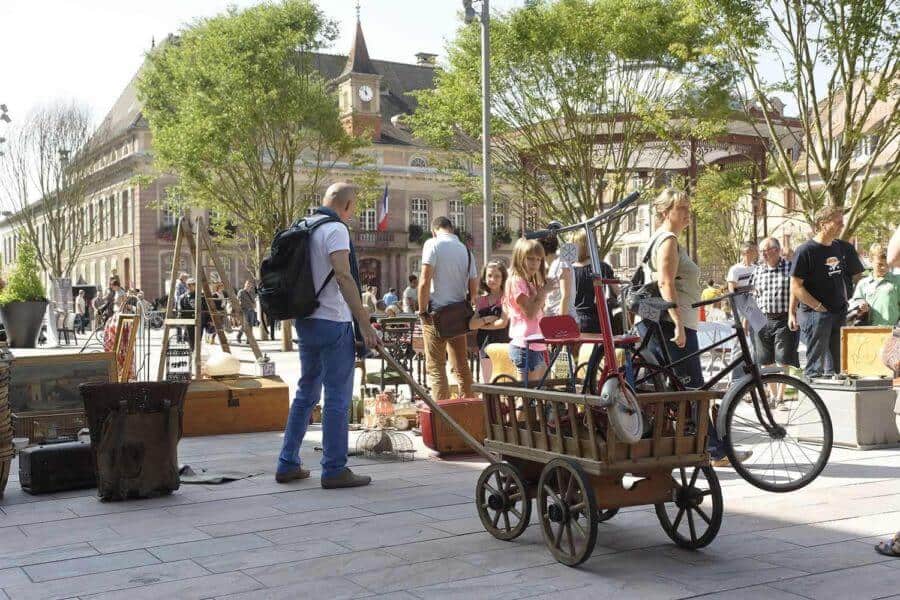
Belfort’s open-air flea market runs on the first Sunday of each month from March to December, drawing more than 120 professional antique dealers to a multi-street layout in the city centre. The regional specialities are the draw. Alsatian bowls and milk pitchers with flower motifs, grey stoneware jugs, ceramic baking molds, folkloric dishware from Lorraine, enamel plaques from Alsace, clocks from nearby Besançon — all of these regularly appear. An antique expert is also present on the premises throughout to deter forgeries.
Antique enthusiasts come from Alsace and Switzerland specifically for the regional stock — which tells you what the market does well.
📍 Where: Place d’Armes, Place de l’Arsenal, Rue de la Grande Fontaine, Grand-Rue, Belfort
📅 When: 1st Sunday of the month (March–December), 08:00–12:00
Farfouille de Leyment ⚠️ Discontinued since 2016
The Farfouille de Leyment, located between Lyon and Geneva, was until 2016 the second-largest open-air flea market in France — over 1,700 vendors across a 20km site, drawing buyers from Switzerland, Italy, Germany, Belgium, the Netherlands, and Austria. It has not taken place since 2016 due to security concerns. We include it here for reference, and in hope that it may eventually return.
Book Your Stay in Eastern France
Lyon is the natural base for eastern France — well connected by TGV, and the Puces du Canal alone justifies the trip. Annecy is two hours by train and worth combining with a weekend in the mountains.
FAQ: Flea Markets in France
What is a brocante in France?
A brocante is a French flea market focused on second-hand and antique goods. The word distinguishes it from a vide-grenier (literally “empty the attic” — a garage sale where private individuals sell their own belongings) and an antiquaire (a professional antique dealer’s shop). In practice, the terms overlap, and many events combine elements of all three. For a fuller explanation, see our guide to brocante, vide-grenier and braderie.
What is the largest flea market in France?
The Grande Braderie de Lille is the largest flea market event in France — and in Europe. It runs across 100 kilometres of Lille’s streets every first weekend of September, with around 10,000 vendors and up to two-and-a-half million visitors. For weekly markets, the Puces de Saint-Ouen in Paris is the largest, with twelve sub-markets covering seven hectares.
Is haggling expected at French flea markets?
Yes — negotiating price is standard at French flea markets, and vendors generally expect it. Price tags are rare; vendors often set prices based on how a customer presents themselves. Dressing down and speaking a few words of French can reduce the opening price by 20–30%. Approaching the negotiation calmly and with a smile helps considerably. If you name a price and the vendor accepts, you are expected to buy. For practical phrases, see our guide to French flea market idioms.
When is the best time of year to visit flea markets in France?
Spring (April–May) and early autumn (September–October) are the peak seasons for major flea market events across France. Most of the largest annual fairs cluster in these windows: Chambord (1 May), Isle-sur-la-Sorgue (Easter and 15 August), Pézenas (May and October), the Braderie de Lille (September), and the Réderie d’Amiens (April and October). Weekly and monthly markets, however, run year-round in most cities. The south of France is pleasant even in winter; northern markets tend to be quieter and colder from November to February.
Where is the best place to buy antiques in France?
For the widest selection of high-quality antiques: the Puces de Saint-Ouen in Paris (year-round), Isle-sur-la-Sorgue in Provence (permanent dealers year-round, plus two major annual fairs), and the Grande Braderie de Lille (September). For regional specialities, the Brocante de Crèvecœur-le-Grand, the Brocante de Maroilles (both in northern France), and the Brocante de Belfort (eastern France) all maintain high proportions of professional dealers with specialist stock.
For a broader view, see our guide to the best flea markets in Europe, or explore the full interactive map of French flea markets on Fleamapket.