

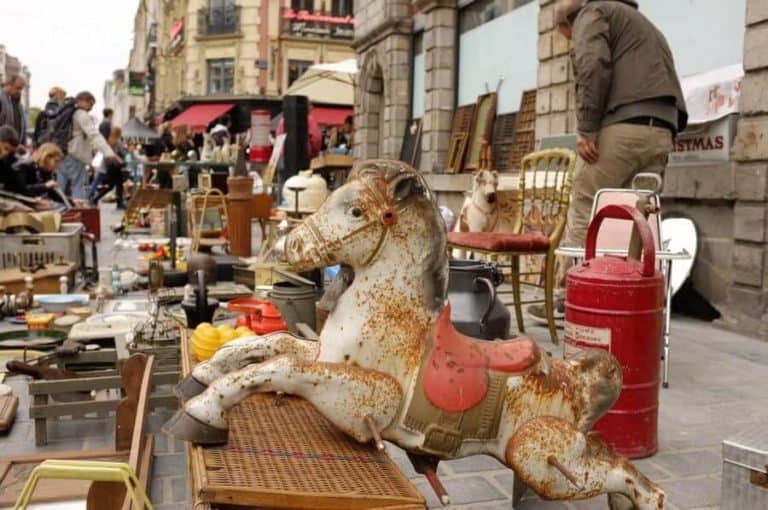

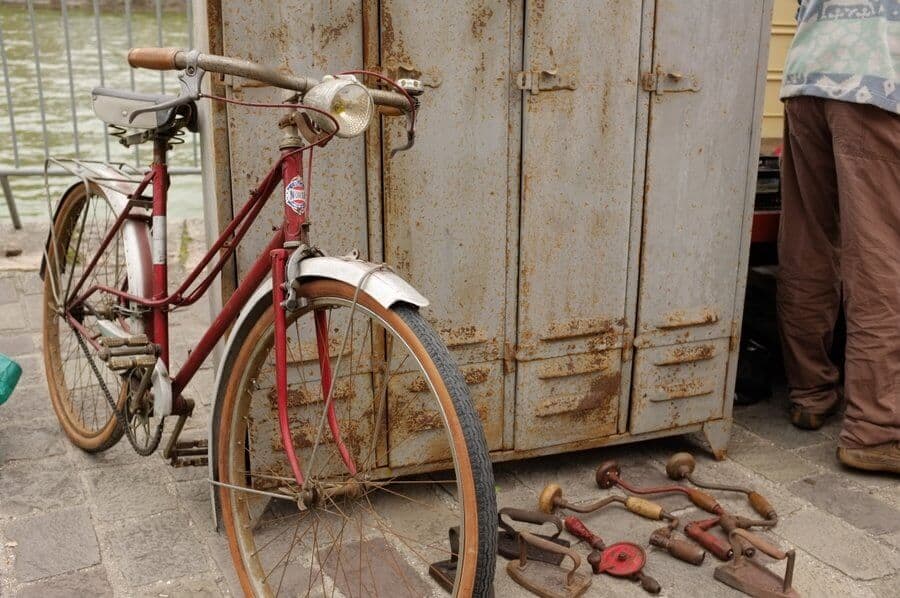
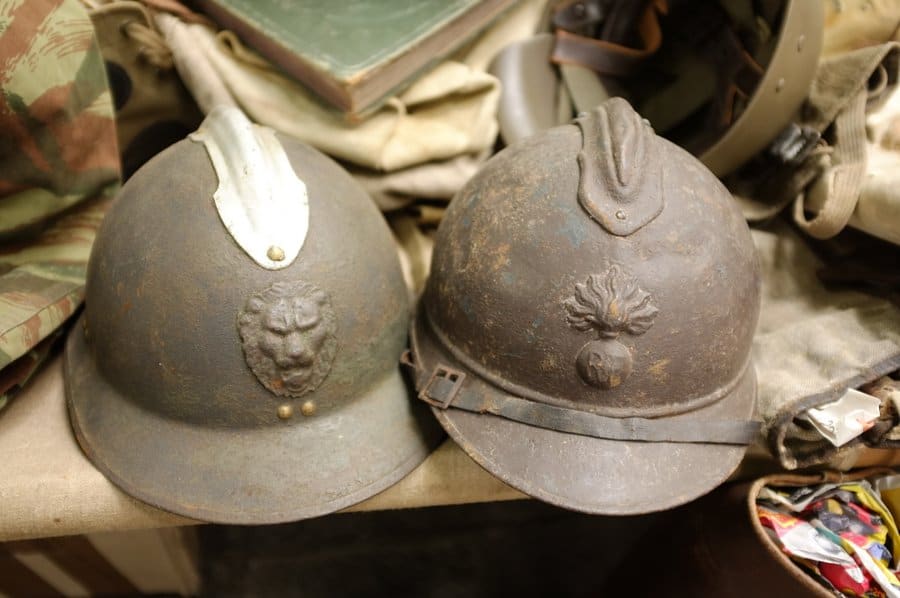
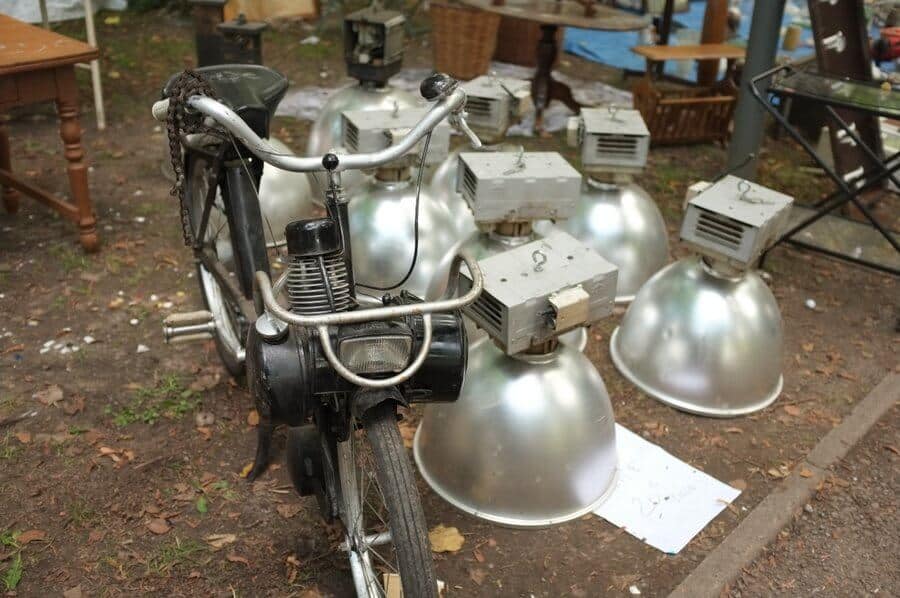
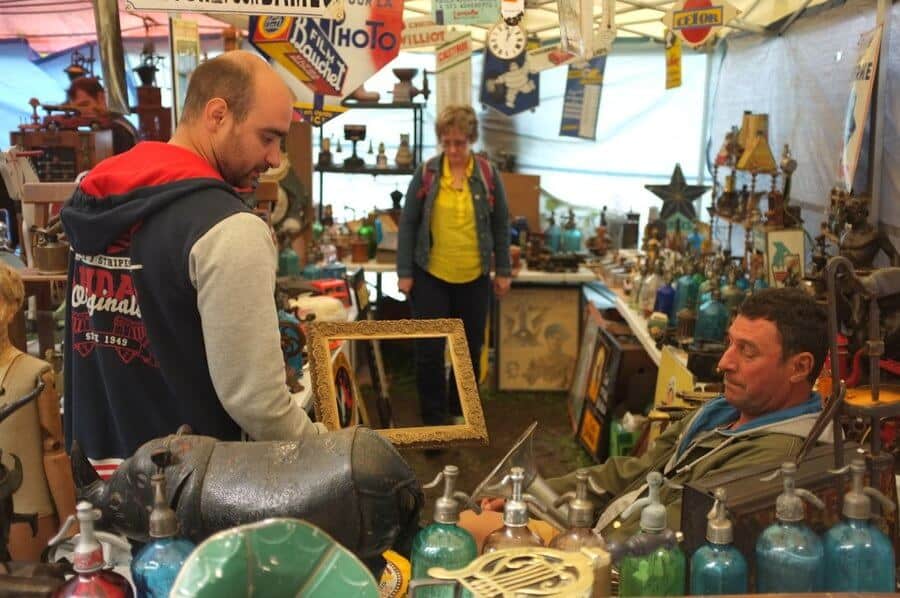
The Grande Braderie de Lille is Europe’s largest flea market — and one of those events that genuinely earns the description. On the first weekend of September, the entire city of Lille transforms into an open-air market stretching across 100 kilometres of streets, with around 10,000 vendors, two million visitors, and enough moules-frites to fill a swimming pool. Possibly several.
It is also one of the oldest street fairs in the world. The first written record of the event dates to 1127, when it was known as the Franche Foire — a trading fair held on what is now the Grand’ Place. The word braderie itself comes from the Flemish braaden (to roast), first used in 1446 when two Flemish merchants obtained permission to sell roast chickens during the fair. Nearly nine centuries later, the moules-frites tradition continues in the same spirit.
Beyond the bargain-hunting, the Braderie is a chance to discover Lille itself: a Flemish city with exuberant architecture, a strong local food culture, and an atmosphere that is warm, festive, and entirely its own.
Dates: Grande Braderie de Lille 2026
The next edition of the Grande Braderie de Lille takes place on Saturday 5 and Sunday 6 September 2026, from 8h Saturday to 18h Sunday — 34 hours of non-stop browsing. As tradition dictates, the event falls on the first weekend of September.
The city expects around two million visitors across the weekend. Hotels in Lille fill up months in advance. If you are planning to attend, book accommodation now — and consider nearby cities such as Brussels or Arras as fallback options, both well connected by train.
What’s new for the Grande Braderie de Lille 2026?
After the Braderie was cancelled in 2016 (following the Nice terror attack) and again in 2020 and 2021 (Covid-19), the city undertook a significant reorganisation of the event. Most of those changes have now become permanent fixtures.
The core area dedicated to the Braderie covers the Vieux-Lille and Lille-Centre neighbourhoods, extending into the Wazemmes district along the Rue Léon Gambetta. Security checkpoints have been progressively refined across successive editions to improve visitor flow without compromising safety standards.
Antiques and professional dealers
Professional antique dealers are concentrated along the Boulevard Louis XIV and the Boulevard de la Liberté — the designated “Antiques & vintage shopping itinerary”. A significant cluster of British antique specialists typically sets up near the Porte de Roubaix and the Rue de l’Opéra. For serious collectors, these areas are the most efficient starting point.
Sub-events and specialist braderies
Several parallel events run alongside the main market. A specialist comic book braderie takes place at the Palais des Beaux-Arts. A children’s braderie — toys, books, games — is held at the Gare Saint-Sauveur. The Foire aux Manèges, one of the three largest funfairs in France with around 180 attractions, installs itself in Lille a few days before the Braderie and stays through the end of September.
Security
The event operates with 29 access points under police surveillance and concrete roadblocks around the perimeter. The zone is closed entirely to vehicles from Saturday 8h to Sunday 18h. Access on foot only, through the designated entry points.
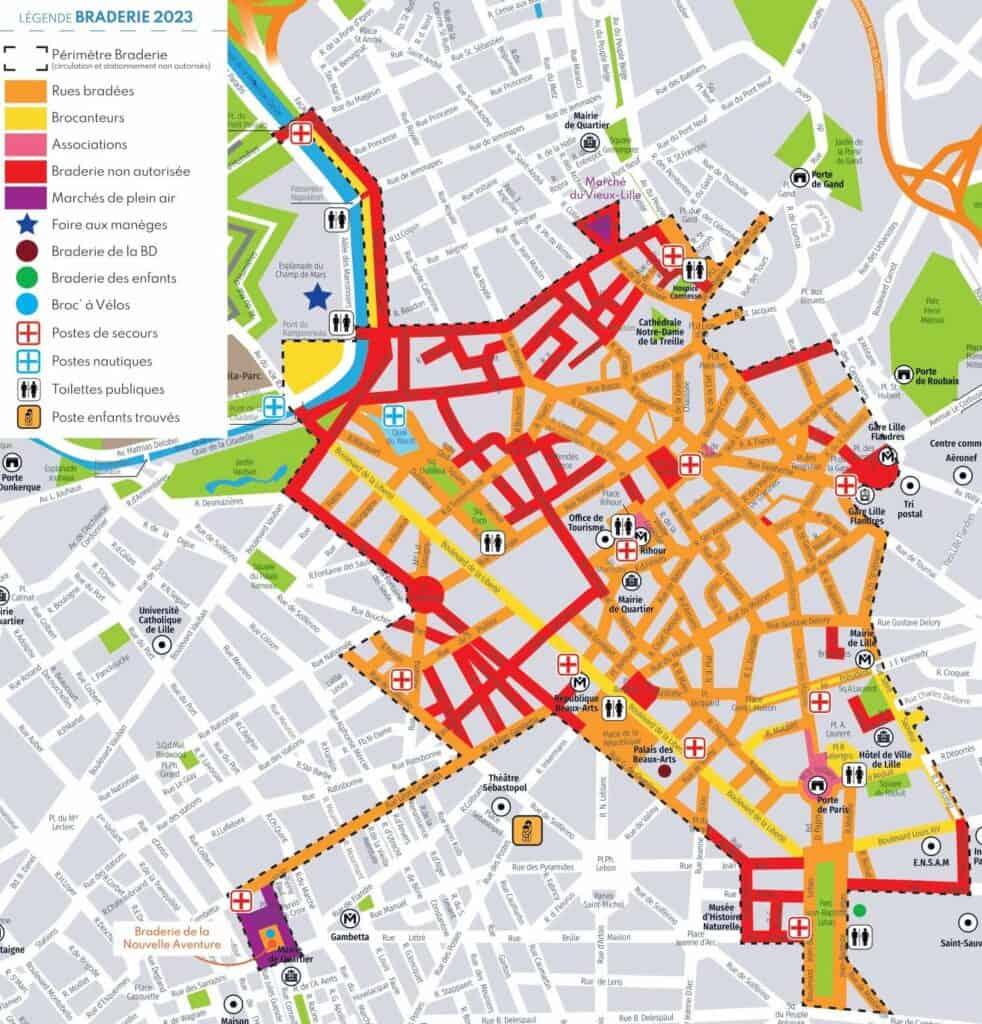
Official Map of the Grande Braderie de Lille
The official map of the Braderie de Lille is published by the city administration a few weeks before the event and updated each year. The layout consistently features dedicated zones for professional antique dealers — collectors should head to the areas marked in yellow, which cover the Boulevard de la Liberté, Boulevard Louis XIV, the Esplanade, Rue Saint-Sauveur, and Place Roger Salengro.
The perimeter covers approximately 90% of the pre-2017 zone, including the Centre and Vieux-Lille neighbourhoods. Residents along designated streets outside the core area are also permitted to set up stalls.
The Grande Braderie de Lille in Numbers
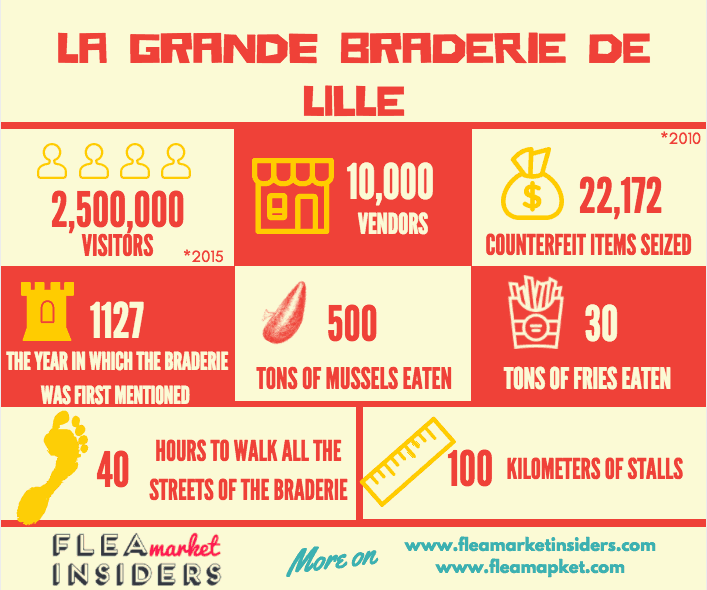
1127 — the year of the first written record of the event, then known as the Franche Foire.
2 days — the duration of the Braderie (Saturday 8h to Sunday 18h, 34 hours non-stop).
100 km — the length of stalls spread across Lille’s streets during the event.
40 hours — the time it would take to walk every street where the Braderie takes place.
10,000 — the average number of vendors selling at the Braderie.
500+ tonnes — the weight of mussels consumed over the weekend in 2025. Accompanied by 30 tonnes of frites. Restaurants along the route compete to build the tallest pile of empty shells outside their doors. Since 2018, the shells are collected and recycled into floor tiles.
2,500,000 — the number of visitors in a strong year. For comparison, the Braderie de Rennes — the second-largest street fair in France — attracts around 400,000 visitors annually.
Getting to Lille: Travel Information
Lille is exceptionally well connected. By train, it is roughly 1h from Paris (TGV), 1h30 from Brussels, and 1h30 from London (Eurostar via the Channel Tunnel). The SNCF typically increases TER and TGV services during Braderie weekend, with reduced fares available from many origins.
No cars are permitted inside the Braderie zone during the event. The perimeter is accessible on foot only, through 29 controlled access points. If you are driving to Lille, use one of the 12 park-and-ride facilities run by Ilévia around the metropolitan area. These are free of charge for visitors who purchase a local train (TER) or metro ticket for onward travel. Most P+R facilities close at midnight (some at 1am) and do not accommodate campervans or large vehicles.
Within the city, Ilévia reinforces its metro, bus and tramway lines throughout the weekend with increased frequency and extended hours.
Book Your Stay in Lille
Lille fills up fast. Two million visitors compete for the same hotel rooms, and properties in the city centre are typically booked out months before the event. Book early — and if Lille is sold out, look at Brussels (1h30 by train) or Arras (30 minutes). Both are realistic bases with direct rail connections.
What to Do in Lille Beyond the Braderie
Lille is worth a visit even when the Braderie is not happening. The old town is compact, walkable, and architecturally striking — a mix of Flemish baroque and French neoclassical that reflects the city’s turbulent history as part of Flanders, Burgundy, Spain, the Netherlands, and eventually France. Start at the Grand’ Place and let the streets take you from there.
Eating. Flemish culture runs deep in the local cuisine. Look for an estaminet — a traditional Flemish brasserie serving regional dishes, strong local beer, and an atmosphere that feels like it predates the 20th century. Anything on the menu with a Flemish name is worth trying. Moules-frites, naturally, are available year-round.
Shopping. Lille is a young, student-heavy city with genuinely interesting boutiques — independent shops selling homeware, clothing, and design objects that sit somewhere between quirky and very good. The antique quarter around the Rue de la Monnaie is worth an afternoon outside of Braderie season.
Nightlife. Lille stays up late. There are bars and clubs across every neighbourhood, with the area around the Vieux-Lille particularly lively on weekends. During Braderie weekend, the city effectively becomes a festival — the streets stay loud until the early hours.
For more on sightseeing in Lille, the official Lille city website has practical visitor information (in French).
10 Useful French Phrases for Bargaining
Most vendors at the Braderie speak some English, but opening in French changes the dynamic immediately — and usually shifts the price in your favour.
“C’est combien ?” — How much is that?
“Quel est votre meilleur prix ?” — What is your best price?
“Désolé, c’est trop cher pour moi.” — Sorry, it’s too expensive for me.
“Pouvez-vous baisser encore le prix ?” — Can you go a little lower?
“Vous me faites un prix si j’en prends plusieurs ?” — Is there a discount if I take more than one?
“Coupons la poire en deux.” — Let’s meet in the middle.
“Je n’ai que 20 euros. Est-ce que ça va ?” — I only have 20 euros. Is that enough?
“Je peux payer en liquide ?” — May I pay in cash?
“Je le prends.” — I’ll take it.
“Marché conclu !” — Deal!
How to Make the Most of the Braderie de Lille
- Book accommodation early. Lille sells out months in advance. Even if you are not certain you will attend, book a room with free cancellation — you have nothing to lose. If the city is full, Brussels or Arras are both realistic alternatives with fast train connections.
- Leave the car at home. No vehicles are permitted inside the Braderie zone. Use the park-and-ride facilities on the outskirts and take the metro in. Your feet will do the rest — the market zone is enormous.
- Bring an umbrella. Lille is in the north, where September weather is unpredictable. Sunshine and rain can alternate within the same hour. A light waterproof is essential.
- Bring cash. Most vendors do not accept cards. Come prepared, and keep your wallet in a front pocket — pickpockets are active in the crowds.
- Plan for large purchases. If you find furniture or bulky items, consider a shipping service to get your finds home. Carriers can be arranged in advance via platforms like Shiply, with collection organised remotely if needed. Alternatively, leave items with a dealer or at your accommodation and arrange collection after the event.
- Go early. The best pieces move fast. Professional dealers are already buying before most visitors have arrived. Saturday morning, as early as you can manage, is the moment to be there.
FAQ: Grande Braderie de Lille
When is the Grande Braderie de Lille?
The Grande Braderie de Lille takes place on the first weekend of September each year. The 2026 edition runs from Saturday 5 September (from 8h) to Sunday 6 September (until 18h) — 34 hours of non-stop browsing.
Is the Braderie de Lille free?
Yes, entry to the Braderie de Lille is free for visitors. Participation as a vendor is subject to fees for professional dealers and food sellers; Lille residents can set up stalls outside their homes free of charge.
How big is the Braderie de Lille?
The Braderie de Lille covers around 100 kilometres of streets across Lille’s city centre and the Wazemmes neighbourhood, with approximately 10,000 vendors and between two and two-and-a-half million visitors. It is consistently described as the largest flea market in Europe.
Where are the antique dealers at the Braderie?
Professional antique and vintage dealers are concentrated on the Boulevard Louis XIV, the Boulevard de la Liberté, the Rue Saint-Sauveur, and the Esplanade du Champ-de-Mars. On the official map, these areas are marked in yellow. For high-quality finds, head there first — the general flea market sections are worth exploring, but the antique zone is where serious collectors focus.
For the full guide to flea markets in France, including markets across the country, see our dedicated guide. And if you are planning a longer trip, check out the best flea markets in Europe for inspiration beyond Lille.