

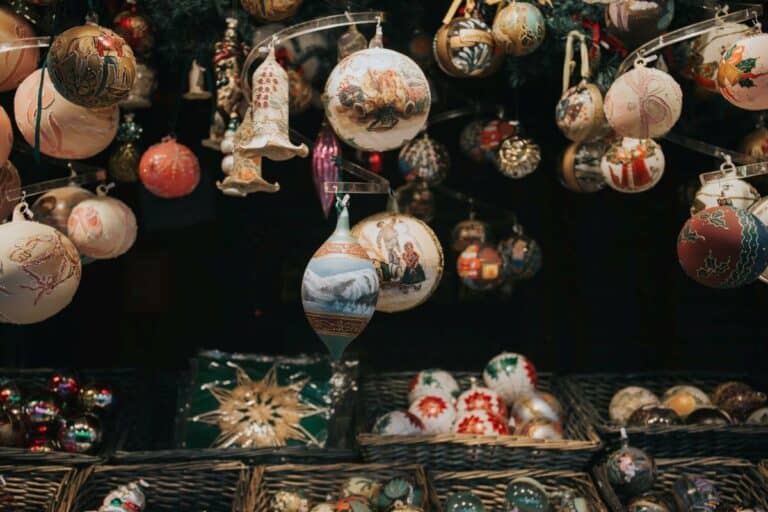

Vintage Christmas decorations are among the most consistently collected objects in the antique market — partly because of nostalgia, partly because the craftsmanship of original pieces is genuinely difficult to replicate, and partly because they surface in the most unexpected places. A box in a grandparent’s attic. A flea market stall in November. An estate sale in December. The question most people have when they find one is the same: what is it actually worth?
This guide covers the history of Christmas ornament-making, what drives value in the collector’s market, and the best places to find vintage pieces today.
A Brief History of Christmas Ornament-Making
The tradition of decorating Christmas trees dates to 16th-century Germany, where trees were brought indoors and adorned with fruit, nuts, and candles for church services. The first glass baubles — known as Kugeln — were produced in the town of Lauscha. Hans Greiner, a local glassblower, made decorations in the shapes of fruits and nuts; other artisans followed, creating glass figurines using clay moulds.
The process was precise and labour-intensive. A glassblower heated a glass tube over a flame, inserted it into a clay mould, and blew the heated glass outward to fill the shape. After cooling, silver nitrate — a silvering technique developed by Justin von Liebig in the 1850s — was stirred into the interior of the ornament. Once the nitrate solution dried, the piece was hand-painted and fitted with a metal cap and hook.
This tradition spread across Europe and eventually to North America. During the 1930s, mass production took over as German industry collapsed, and the character of Christmas ornament manufacturing changed significantly. In World War II, the silver-plating method was discontinued; clear glass ornaments were painted and capped with paper rather than metal. By the latter half of the 20th century, plastic had largely replaced glass for mass-market ornaments — which is precisely why the earlier glass pieces are now collectible.
How Much Are Vintage Christmas Decorations Worth?
Value in the vintage Christmas ornament market is driven by three factors: rarity, condition, and provenance. Most antique ornaments need to be in excellent condition to command strong prices. However, rarity occasionally overrides condition — a genuinely rare piece will attract serious collectors even if it shows wear.
Early glass baubles (pre-1900). The earliest glass baubles — sometimes called by collectors simply “the bauble” — date to as early as 1830. Because of their age and material fragility, surviving examples in good condition can be worth more than $1,000 each. These are the Kugels and their immediate successors from the Lauscha tradition.
Figural ornaments. Glass ornaments in the shape of historical personalities are among the most actively collected. Prices vary considerably by subject: an Eddie Cantor figural ornament can reach $500; a John Bull figure around $300; a President William Howard Taft ornament around $150. These were produced in relatively small numbers for specific markets, which explains the price premium.
Other figural ornaments. Ornaments shaped as Indian chiefs, birds, and metal-wheeled aeroplanes typically sell for $100 to $250 each — more accessible for new collectors, but still meaningful as investments if found in good condition.
Common vintage ornaments. Glass baubles from the mid-20th century, ceramic tabletop trees from the 1960s–70s, and paper honeycomb decorations are generally more affordable. Condition and completeness — sets with original boxes, trees with all their pegs — affect value significantly at this tier.
Where to Find Vintage Christmas Decorations
Flea markets and garage sales
Flea markets are among the best sources for vintage Christmas ornaments — particularly in autumn, when sellers clear out storage before the season. The range at any given market is unpredictable: tacky glass bells and clay snowman candle holders sit alongside genuine finds. Prices are generally negotiable, and haggling is both expected and effective. Many markets and vintage shows also run special Christmas displays in November and December.
Online vendors and auctions
Etsy has thousands of sellers specialising in vintage Christmas decorations — reindeer ornaments, retro nativity figurines, 1980s bear tree ornaments, Kugels, and diorama baubles among them. The shop VintageByJade is particularly worth exploring. eBay allows bidding on individual vintage pieces and is useful for tracking what comparable items actually sell for — which is the most reliable way to calibrate market value before buying in person.
Christmas markets and fairs
Most cities host a Christmas fair in November and December. Beyond the handmade crafts, these events regularly feature vendors selling early 20th-century glass baubles, pinecone-shaped vintage decorations, and vintage serving pieces. The atmosphere makes the browsing more enjoyable, and competition from other buyers is lower than at dedicated antique fairs.

Vintage boutiques and charity shops
Vintage stores carry Christmas decorations year-round — often alongside sterling silver jewelry and other collectibles in the same display cabinets. The turnover is unpredictable, which means regular visits pay off more than a single seasonal search. Charity shops are particularly worth checking in January, when families donate inherited decorations after clearing out over the holidays.
Family and friends
The most overlooked source. Grandparents and older relatives frequently have boxes of Christmas decorations — nutcrackers, glass ornaments, ceramic trees — that they are willing to give away or trade. Swapping with friends produces a collection unlike anything available in shops, at no cost. It is also worth going through your own storage: old postcards, vintage jewelry, and found objects can all function as decorations without having been made for that purpose.
FAQ: Vintage Christmas Decorations
How much are vintage Christmas ornaments worth?
It depends significantly on age, rarity, and condition. Early glass baubles (pre-1900) in good condition can reach $1,000 or more. Figural ornaments depicting historical personalities typically sell for $150–$500 depending on the subject. Mid-20th century ornaments — ceramic tabletop trees, indented baubles, paper honeycomb decorations — are generally much more affordable, with prices starting below $20 for common pieces in average condition. Original boxes and complete sets add value at every tier.
How do I know if a Christmas ornament is genuinely vintage?
Start with the material. Pre-1950s ornaments are almost always glass rather than plastic, and will feel heavier and more fragile than later reproductions. Look for hand-painted details, silver nitrate lining (visible as a metallic sheen on the interior), and metal rather than plastic caps. Country of origin markings — “Made in Germany”, “Made in Japan”, “Made in Czechoslovakia” — are useful date indicators. Original cardboard boxes with period-appropriate printing add both evidence and value.
What is the best time of year to find vintage Christmas decorations?
Counter-intuitively, not December. The best finds typically surface in autumn (September–November) at estate sales and flea markets before seasonal demand drives prices up, and in January when families donate inherited collections after the holidays. Online platforms carry vintage Christmas stock year-round, but physical markets are most productive in the shoulder seasons.
What are the most collectible vintage Christmas ornaments?
German Kugels (silver-lined glass baubles from 1840–1900) are the most valuable category, with individual pieces reaching $1,000+. Figural ornaments depicting personalities (Eddie Cantor, John Bull, President Taft) are actively collected and well-documented. Diorama baubles from the 1950s–60s, particularly those made in Japan, are increasingly sought after. For an overview of five iconic types with images and sourcing advice, see our companion guide to 5 vintage Christmas ornaments and where to find them.