

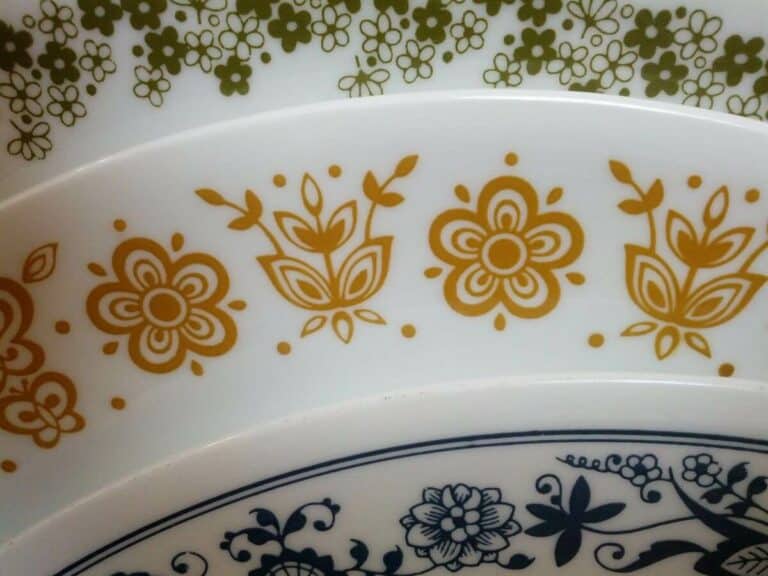

Vintage Corning Ware is one of those things that keeps turning up at flea markets, estate sales and thrift stores — and keeps selling fast. The blue cornflower casseroles, the speckled Pyroceram lids, the oven-to-table dishes that have survived fifty years of kitchens without complaint. There is a reason people still want them. Several reasons, actually.
This guide covers the history of Corning Ware, what makes certain pieces valuable, how to spot the patterns worth picking up, and where to find them — whether you are a serious collector or simply want a casserole dish that will outlast you.
The Origins of Corning Ware
Corning Ware was born in 1958 from an accidental discovery at Corning Glass Works. A researcher named S. Donald Stookey was testing a new photosensitive glass when the furnace overheated. Instead of melting, the glass turned into something harder and more heat-resistant than anyone expected. That material became Pyroceram — a glass-ceramic composite that could go from freezer to stovetop without cracking.
The blue cornflower pattern arrived the same year as the product launch and stayed in production until 1988. It became the most recognised design in the line — simple, clean, instantly identifiable. As the brand grew, it added dozens of other patterns: Spice of Life, Shadow Iris, Wildflower, Floral Bouquet, Black Starburst, and more. Each era has its devotees.
Production of the original Pyroceram cookware in the US ended in 2000 when the brand was sold. That cut-off date is now the defining line between vintage and modern Corning Ware — and it matters to collectors.
Why Vintage Corning Ware Still Holds Up
The practical case for vintage Corning Ware is straightforward. The original Pyroceram pieces can go directly from the freezer to a gas burner — something no modern glass bakeware tolerates. They are microwave safe, oven safe to very high temperatures, non-porous (which means they resist staining and odours), and easy to clean. A casserole dish that works on the stovetop, in the oven, in the microwave, and looks decent enough to serve at the table is genuinely useful.
The aesthetic case is equally straightforward. The patterns have aged well — better, in many cases, than the contemporary kitchenware they replaced. A blue cornflower casserole on a shelf reads as considered rather than dated. The same goes for the Spice of Life vegetables and the graphic Black Starburst pattern, both of which photograph well and work in retro-leaning kitchens without demanding a whole themed renovation around them.
And then there is durability. These pieces were built to last, and most of them have. A well-kept cornflower casserole from 1965 looks much the same as it did when it left the factory. That is unusual in kitchenware, where most things from that era have long since chipped, stained or been discarded.
Collecting Vintage Corning Ware: What to Look For
Not all vintage Corning Ware is equally valuable. The market has specific pressure points, and knowing them saves money and prevents disappointment.
Rarity matters more than age. A common blue cornflower piece from 1960 is worth less than a rare Floral Bouquet piece from 1980. Limited edition designs, short production runs, and regional exclusives all command premiums. The Black Starburst pattern, produced briefly in the early 1960s for the Canadian market, is among the most sought-after — and accordingly among the most expensive.
Condition determines value. Minor surface scratches are expected and generally accepted by collectors. Fading on the printed pattern is more problematic — it suggests heavy use or harsh cleaning. Chips, cracks, and crazing (fine surface fractures) significantly reduce value, and crazing can also indicate the piece is no longer safe to use on the stovetop.
Lids add value. Complete sets with original lids are worth considerably more than the dish alone. Lids were made from tempered glass and broke far more often than the Pyroceram bases, so matching pairs in good condition are harder to find.
Unusual shapes carry premiums. Discontinued or uncommon forms — the petite pan, the grab-it bowl, the oval roaster — are more collectible than the standard round and rectangular casseroles that turn up everywhere.
Vintage Corning Ware: Price Guide
Prices vary considerably depending on pattern, condition, size and whether the lid is included. These ranges reflect the current resale market — individual pieces can fall outside them in either direction.
- Common patterns (blue cornflower, Spice of Life): $10–$30 for individual pieces in good condition. Sets with lids run higher.
- Less common patterns (Wildflower, Shadow Iris, Floral Bouquet): $30–$100 depending on condition and completeness.
- Rare or short-run patterns (Black Starburst, Nature’s Bounty, limited regionals): $100 to several hundred dollars per piece.
- Complete sets in excellent condition: Can reach $500–$2,000+ for rare patterns with original lids and packaging.
Before buying, check recent completed sales on eBay rather than asking prices — asking prices on Etsy often run high, and completed sales give a more accurate picture of what pieces actually sell for.
Where to Find Vintage Corning Ware
The blue cornflower casserole is one of the most commonly donated items in North American thrift stores — which means the common patterns are easy to find and cheap. The rarer patterns require more effort.
Thrift stores and estate sales
Thrift stores are the best starting point for building a collection on a budget. Common patterns often appear at prices well below market value — $3 to $8 for a cornflower casserole is not unusual. Estate sales are more likely to surface complete sets and rarer patterns, particularly in regions where Corning Ware was popular (most of North America and parts of Europe). Go early at estate sales — the kitchenware tables clear fast.
Flea markets and antique fairs
Flea markets can be good for Corning Ware, though prices tend to run higher than thrift stores because dealers have already done the selection work. The advantage is variety — a large antique market may have several vendors with different inventory, making it possible to compare and negotiate. Check flea markets with dedicated kitchenware sections for the best results.
Online marketplaces
eBay is the most reliable online source for vintage Corning Ware, with the largest selection and the most transparent pricing (use completed sales to calibrate). Etsy has a strong selection too, including dedicated vintage kitchenware shops with well-photographed stock — useful when you know exactly what pattern you want, including the blue cornflower pattern. Prices on Etsy tend to reflect collector awareness, so expect to pay more than at a thrift store.
Collector communities
Facebook groups and dedicated forums for Corning Ware collectors are genuinely useful — not just for buying and trading, but for identifying patterns and getting fair-market valuations before you spend. Members often post pieces they want to sell directly, cutting out platform fees and sometimes offering better prices than eBay. If you are pursuing rare patterns, these communities are the fastest way to find them.
Using and Caring for Vintage Corning Ware
Original Pyroceram pieces (pre-2000) are safe for stovetop use, oven use up to high temperatures, microwave reheating, and serving at the table. One important caveat: avoid sudden temperature changes. Do not take a piece from the freezer and put it directly on a hot burner. Let it come to room temperature first — Pyroceram handles gradual temperature changes well, but rapid extremes can cause stress fractures over time.
For cleaning, mild dish soap and a soft sponge are sufficient for everyday use. Avoid abrasive pads and harsh cleaners, which dull the pattern. For stubborn residue, a paste of baking soda and water left for 20–30 minutes generally works without damaging the surface. Do not put vintage Corning Ware in a dishwasher repeatedly — the pattern fades over time with hot dishwasher cycles.
Before using a piece on the stovetop, inspect it carefully for crazing — a network of fine cracks in the surface. Crazed pieces should not be used on direct heat. They are still fine for display or oven use at moderate temperatures, but the structural integrity of a crazed Pyroceram piece under stovetop conditions is uncertain.
FAQ: Vintage Corning Ware
What is the most valuable vintage Corning Ware pattern?
The Black Starburst pattern, produced briefly in the early 1960s primarily for the Canadian market, is consistently among the most valuable. Other high-value patterns include Nature’s Bounty, Country Festival, and any regional exclusives produced in small quantities. Condition and completeness (with original lids) affect value as much as the pattern itself.
How do I know if my Corning Ware is vintage?
Check the stamp on the bottom. Original Pyroceram pieces made before 2000 are marked with a “P” followed by a size designation (P-1¾-B, for example). Pieces made after the brand changed hands in 2000 are typically glass or stoneware, not Pyroceram, and are not considered vintage by collectors. The backstamp also usually includes “Corning Ware” and sometimes a patent number that can be traced to a production year.
Is vintage Corning Ware safe to use?
Generally yes, with a few caveats. Inspect pieces for crazing before stovetop use. Avoid extreme sudden temperature changes. The decorated patterns on older pieces used ceramic pigments that are considered safe for food contact, but very worn patterns (particularly those that are chipped or flaking) are best retired to display use only.
Where is the best place to buy vintage Corning Ware?
For common patterns at low prices: thrift stores and estate sales. For rare patterns: eBay completed listings and collector community groups. For curated selections with good photography: Etsy. Flea markets sit somewhere in the middle — more selection than a single thrift store, higher prices than a lucky estate sale find.
Vintage Corning Ware rewards both the patient browser and the informed collector. The common patterns are affordable, practical, and genuinely attractive. The rare ones — when you find them in good condition — are among the more satisfying things to pull out of a cardboard box at a flea market. Start with what you like the look of, learn what the backstamps mean, and the rest follows naturally.
For more on finding vintage kitchenware at flea markets, see our guide to vintage shopping tips and our roundup of the best online vintage shops.