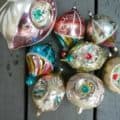

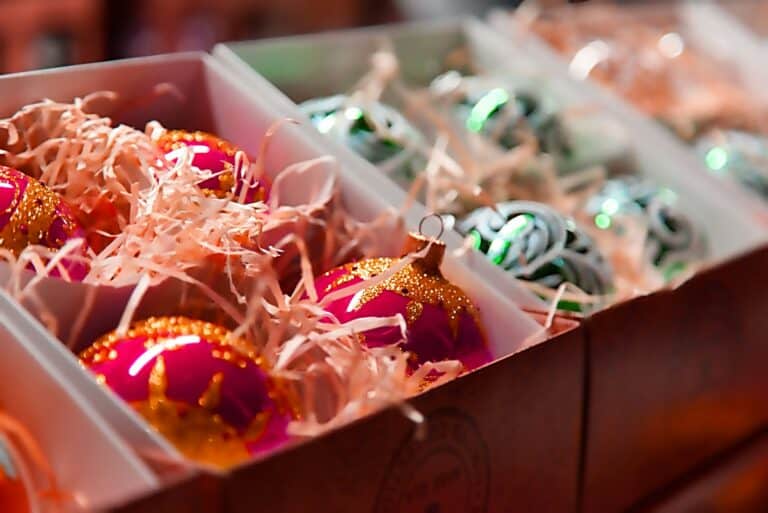

Vintage Christmas ornaments have a dual appeal that keeps them relevant long after the season ends. For some, they are vessels of family memory — the ornaments that came out of the same box every December for forty years. For others, they are a serious collecting category with a well-documented market, significant price variation, and genuine historical depth. Both motivations are valid, and they often overlap.
This guide covers what drives collector value, which ornament types command the highest prices, what affordable vintage options exist, and how to find genuine pieces at flea markets and estate sales.
Sentimental Value and Collector Value
Vintage Christmas decorations attract two distinct audiences. Decorators want pieces that carry warmth and visual character — the imperfect patina of a hand-painted bauble, the specific weight of a glass ornament that was made to last. Collectors, by contrast, are focused on historical significance and market value. The two groups often compete for the same objects, which is part of what keeps prices strong.
Figural ornaments — those shaped as animals, people, or objects rather than traditional spheres — are particularly prized by collectors. They were often produced in smaller quantities than standard baubles, and the better examples show a level of craftsmanship that is difficult to replicate. Many surface through estate sales and antique shops rather than from dedicated dealers, which keeps the market interesting for patient hunters.
How Condition Affects Value
Condition is the single most important factor in vintage Christmas ornament values — with one exception. Ornaments that have retained their original components, colour, and glass integrity are rare and command strong prices. Many of these pieces date from the early 20th century, which means finding them undamaged is genuinely uncommon.
The exception is rarity. A sufficiently rare ornament will attract serious collectors even in imperfect condition — the market for Christmas ornaments from the Biedermeier period, for instance, is driven more by scarcity than by condition. A well-preserved figural ornament can easily fetch over $500. Rarer pieces — ornaments shaped as historical figures or exotic animals — regularly reach into the thousands.
Kugels: The Most Valuable Vintage Christmas Ornaments
Kugels — heavy glass ornaments that originated in Germany in the mid-19th century — are the pinnacle of Christmas ornament collecting. The earliest versions were so heavy they could not be hung on tree branches and were instead displayed on stands. That weight, and the silver nitrate lining that gives them their distinctive interior glow, is what distinguishes originals from later reproductions.
Prices vary significantly by shape and colour. A rare coloured grape cluster Kugel can sell for more than $1,000. Egg-shaped variants typically fetch $500 to $800. Less well-known but equally collectible are figural ornaments based on cultural icons — an ornament resembling Eddie Cantor, for example, could fetch $500 or more at the right auction.
Affordable Vintage Christmas Ornaments
Not all vintage Christmas ornaments require a significant outlay. Glass ball ornaments from brands such as Shiny Brite, produced from the 1940s through the 1960s, are among the most accessible entry points into vintage collecting. A box in excellent condition can be found for $50 to $60 — affordable, genuinely vintage, and visually distinctive enough to make an immediate difference on a tree.
Shiny Brite ornaments were produced in large quantities, which is why they remain accessible. However, sets with original boxes, complete colour ranges, or unusual shapes command premiums. As with most collecting categories, the standard examples are cheap and the exceptional ones are not.
Where to Find Vintage Christmas Ornaments
Flea markets, online auctions, antique shops, and estate sales are the main sources. Each has its advantages. Estate sales tend to surface complete collections rather than individual pieces, which is useful when building a set. Flea markets offer the best opportunity for negotiation. Online auctions — eBay in particular — allow price comparison across hundreds of listings simultaneously, which is the most efficient way to calibrate fair market value.
One practical tip: shop off-season. The best prices on vintage Christmas ornaments appear in January and February, when seasonal demand has passed and sellers are motivated to clear stock. Summer flea markets and estate sales also surface holiday ornaments at prices that would not be possible in November.
10 Flea Market Finds to Use as Christmas Ornaments
Before heading to the department store, spend a weekend at your local flea market. Beyond conventional ornaments, dozens of everyday objects make compelling tree decorations — particularly when you are building a themed or eclectic tree. Here are ten flea market finds worth looking for:
- Tartlet tins — catch light beautifully and come in dozens of shapes
- Old buttons — cluster them or hang individually
- Vintage teacups — fill with greenery or fairy lights
- Fishing lures — the metallic finish works surprisingly well
- Vintage postcards — punch a hole and hang with ribbon
- Vintage jewelry — brooches especially
- Chandelier crystals — hang singly for maximum light refraction
- Silverware — old spoons tied with ribbon make distinctive hangings
- Millinery supplies — feathers, velvet flowers, hat pins
- Rag balls — mix with glass ornaments for texture contrast
And never underestimate a well-placed nutcracker.
FAQ: Vintage Christmas Ornaments
What are the most valuable vintage Christmas ornaments?
German Kugels — heavy silver-lined glass ornaments produced from around 1840 to the early 1900s — are consistently the most valuable category. Rare coloured grape cluster Kugels can exceed $1,000; egg-shaped variants typically sell for $500–$800. Figural ornaments depicting historical personalities (Eddie Cantor, President Taft, John Bull) are also highly collectible, with prices ranging from $150 to $500 depending on the subject and condition. Biedermeier-period ornaments are among the rarest and most valuable of all.
What are Shiny Brite ornaments?
Shiny Brite is an American brand that produced glass ball ornaments from the 1940s through the 1960s. They are recognisable by their distinctive metallic finish, cap style, and the Shiny Brite brand name often printed on the cap or box. Because they were mass-produced, they remain one of the most accessible entry points into vintage Christmas ornament collecting — a box in good condition typically sells for $50–$60. Original boxes and complete colour sets add value.
When is the best time to buy vintage Christmas ornaments?
January and February offer the best prices — seasonal demand has passed and sellers are motivated to move stock. Summer estate sales and flea markets are also productive, as holiday items surface throughout the year at prices that reflect off-season timing rather than festive demand. Avoiding the October–December window, when competition from decorators drives prices up, is the most reliable way to buy well.
Is Christmas a time to dust off ornaments that have been in your family for generations — or do you see them purely as decorations? Share your thoughts in the comments below.