

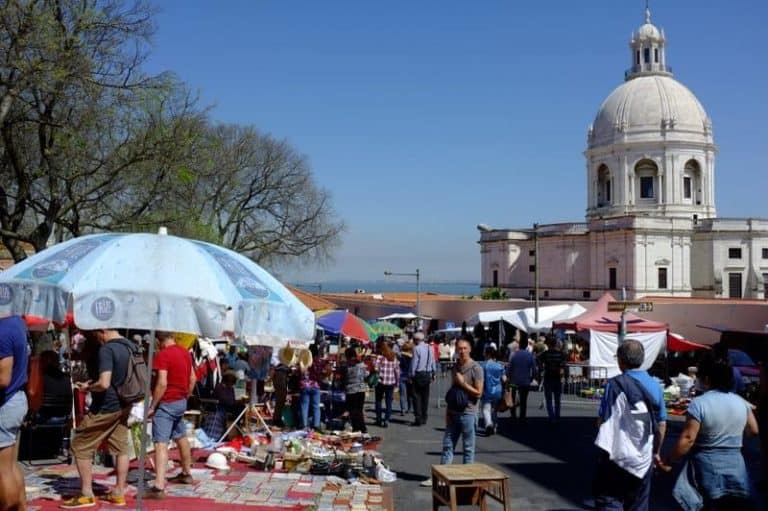

If you ask anyone in Lisbon where the flea market is, they will point you straight to the Feira da Ladra. Unlike cities such as London, Rome or Paris — where the answer to “where’s the flea market?” leads to a long conversation — Lisbon has one undisputed answer. Held every Tuesday and Saturday in the Alfama district’s Campo de Santa Clara, it is the city’s oldest and most beloved open-air market, drawing tourists, collectors and locals alike twice a week throughout the year.
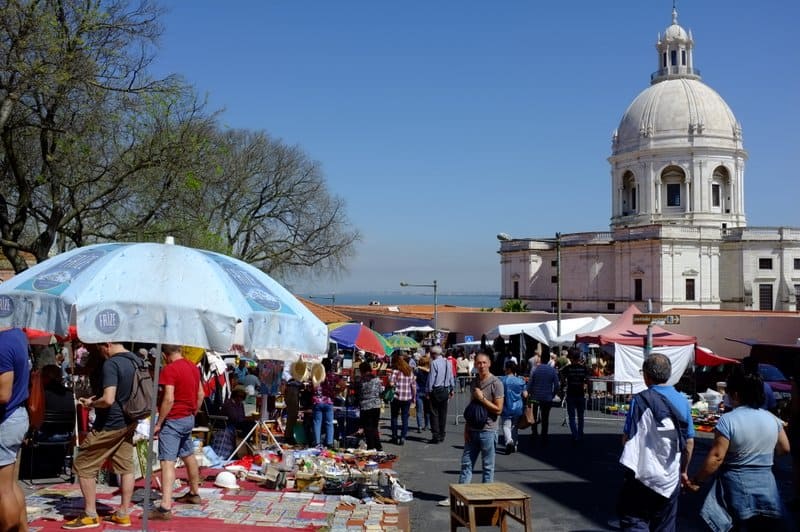
The name translates literally as “Thieves’ Market” — in Portuguese, ladra is a female thief. The market’s roots stretch back to 1272, making it one of the oldest flea markets in Europe. It settled permanently at Campo de Santa Clara in 1882, with Saturday trading added in 1903. Despite its notorious name and medieval origins, it keeps an excellent reputation today — and its setting, wedged between a national pantheon and a historic monastery, is unlike any other market in the world.
What to Expect
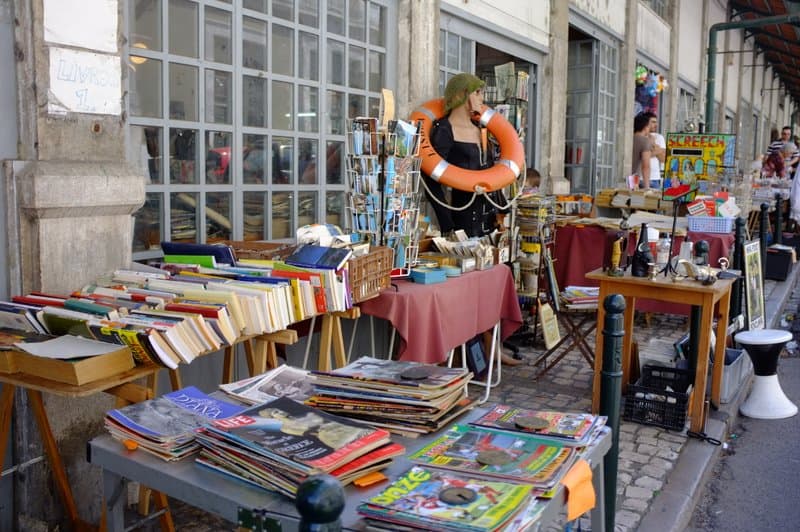
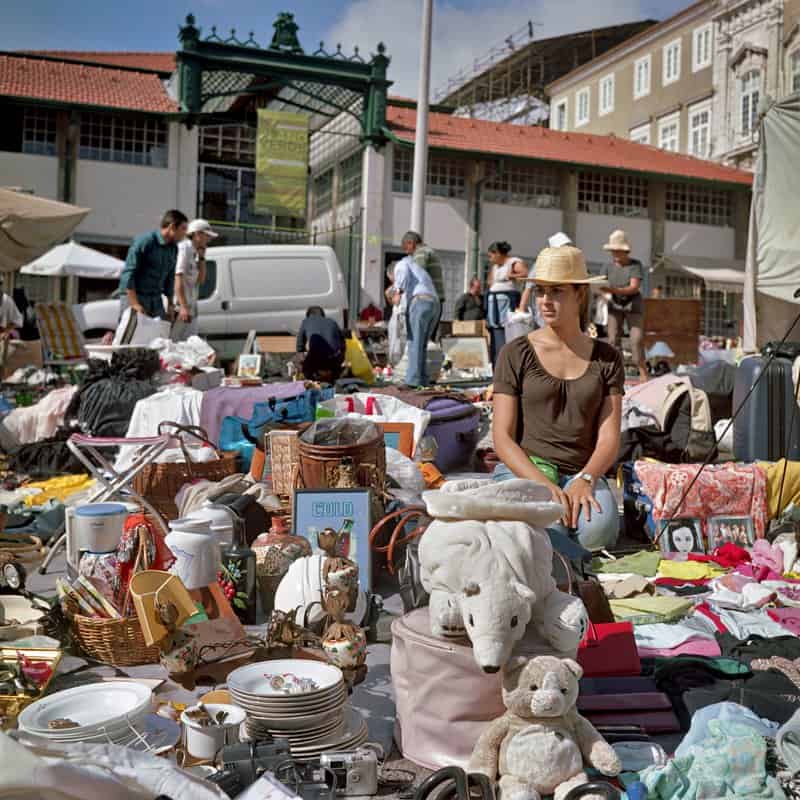
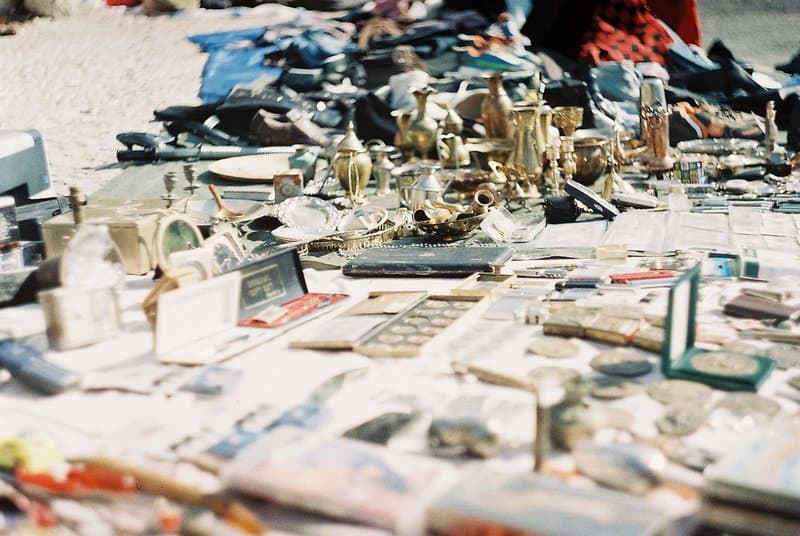
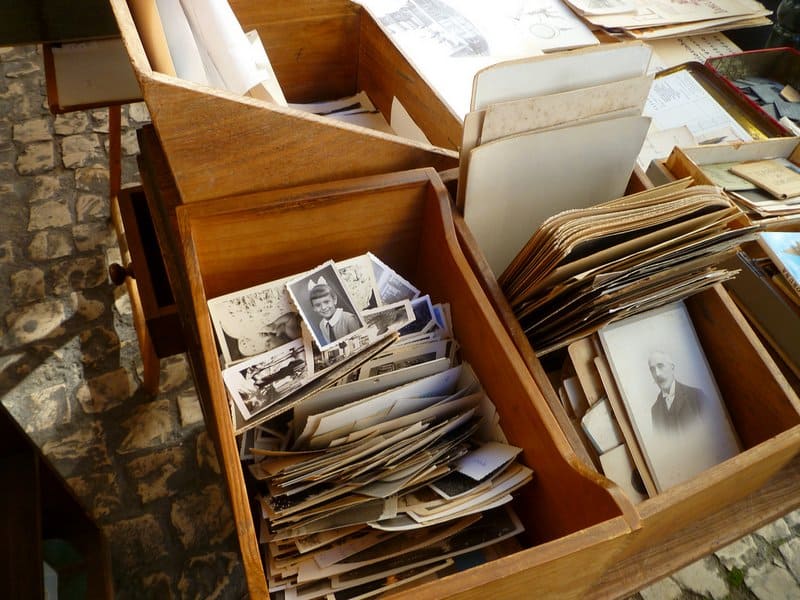
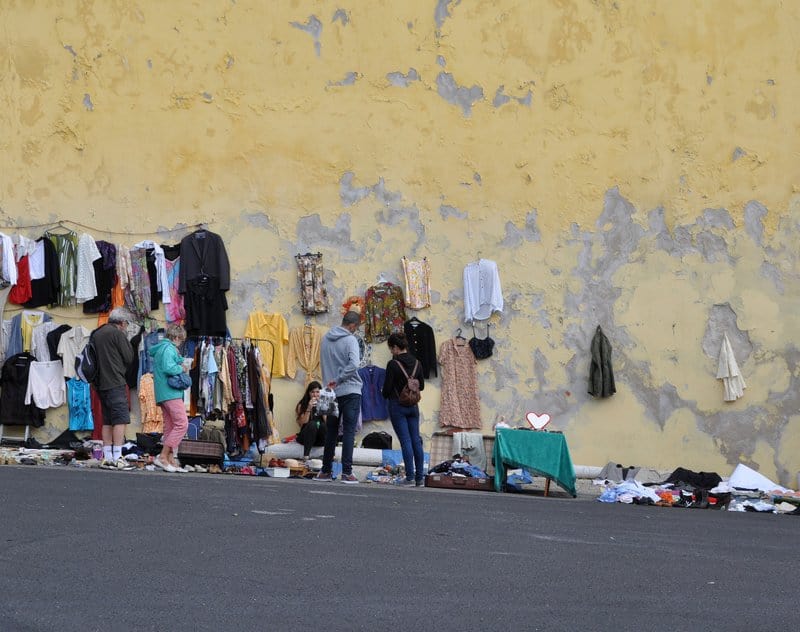
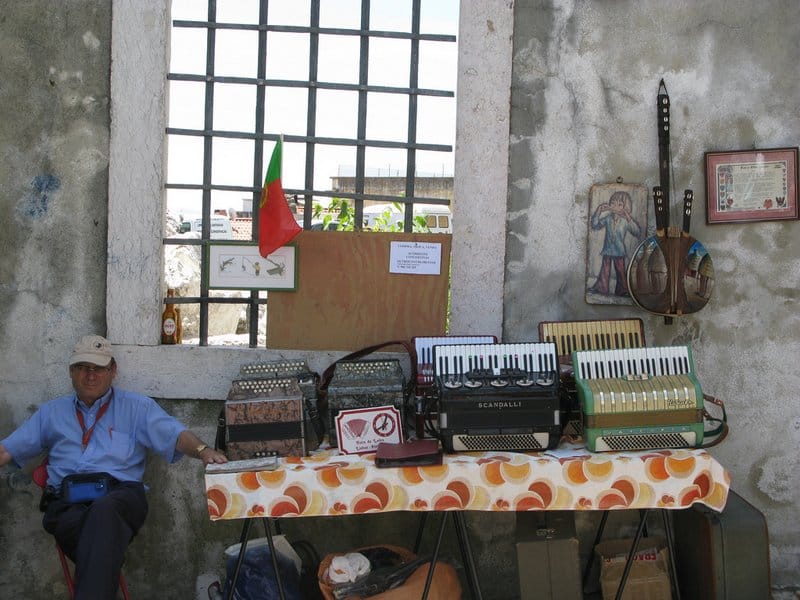
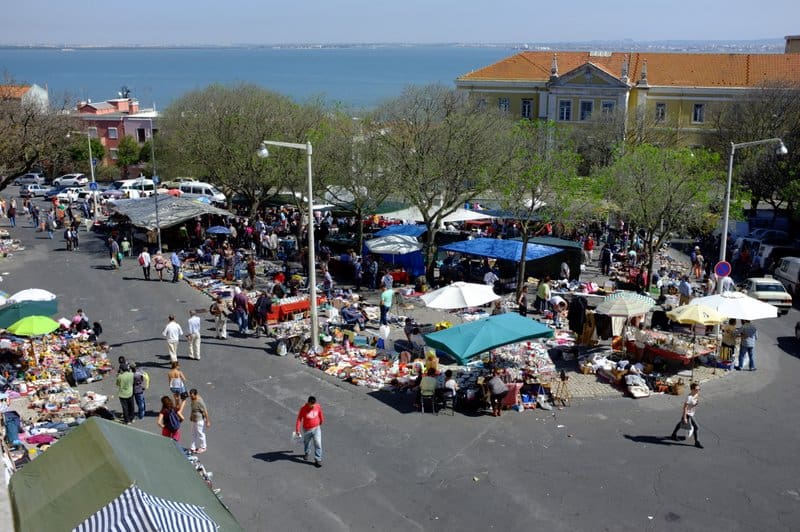
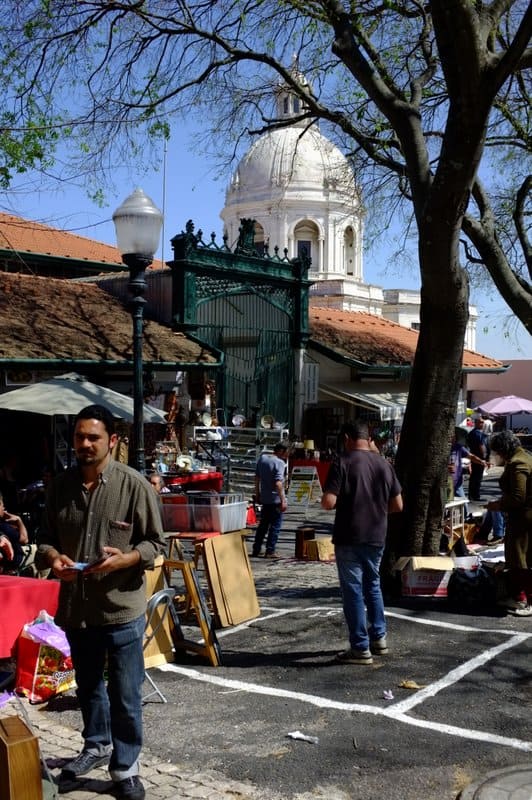
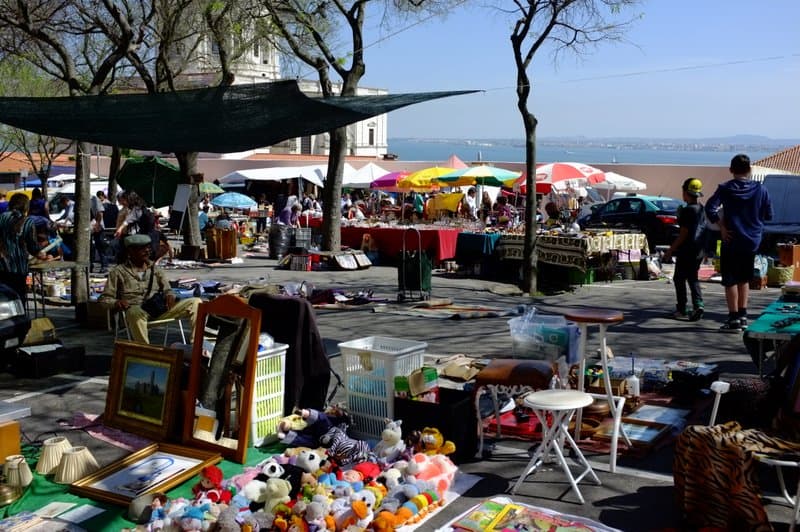
The Feira da Ladra is an eclectic and cheerful bric-a-brac experience. Stalls of all sizes spread across the Campo de Santa Clara and spill into surrounding streets, while many traders simply lay their wares on a stretched-out blanket on the ground. You’ll find antiques, vintage clothing, furniture, collectibles, old books, vinyl records, stamps, coins, militaria, handmade crafts, vintage ceramics and a constant stream of unexpected oddities. One stall might sell rewired vintage lamps with funky glass fittings; the next offers Portuguese-made shoes and socks, original artworks or boxes of mismatched plates at €1 each.
Saturday is the bigger of the two market days, with more vendors, more street performers and most of the surrounding antique shops and local restaurants open. Tuesday, by contrast, offers a quieter, more local experience — fewer tourists, easier browsing, and sometimes more willing vendors. Furthermore, the market is free to enter on both days, which makes it one of the most accessible cultural experiences in Lisbon.
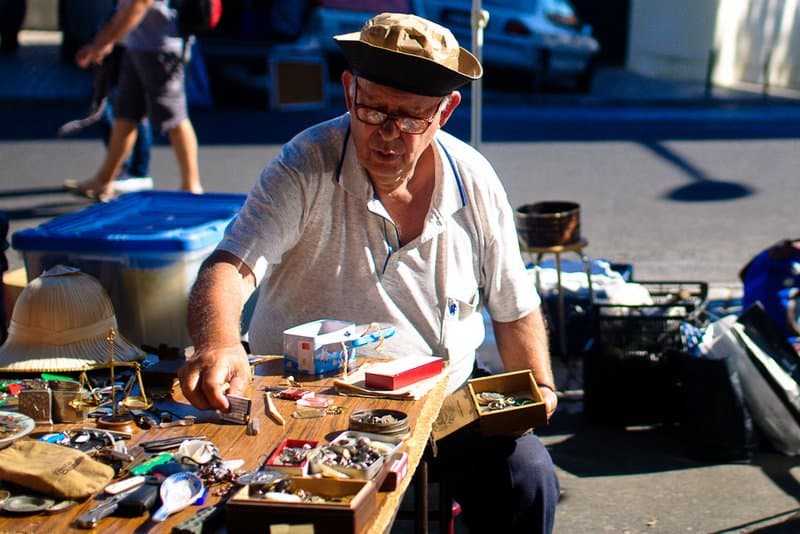
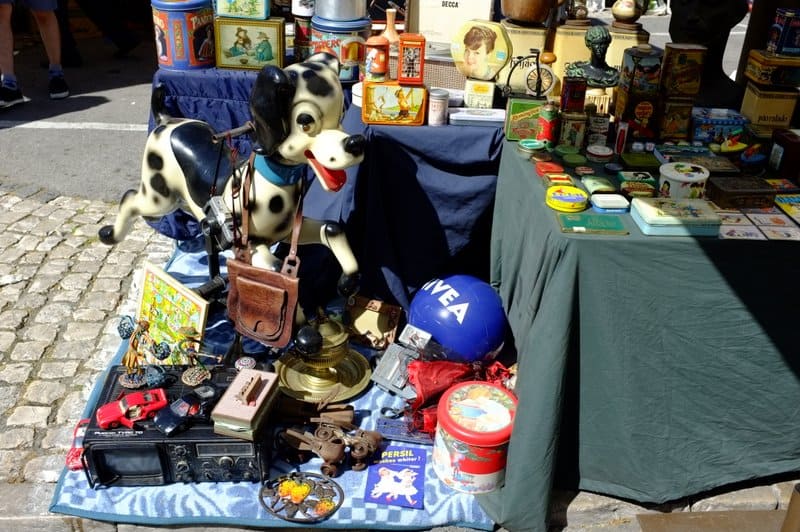

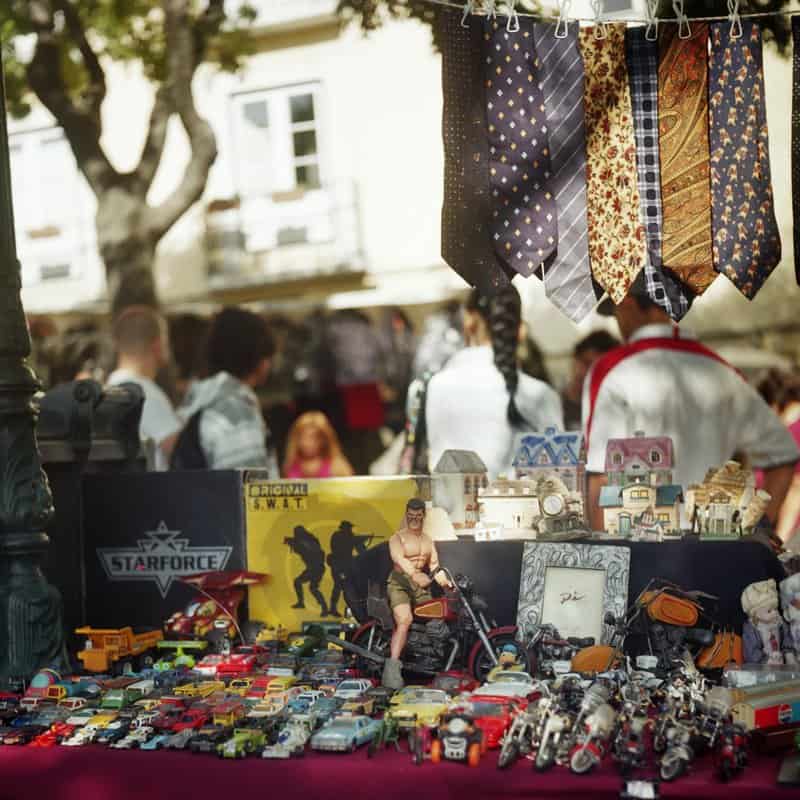
A Market with an Extraordinary Setting
The Feira da Ladra sits between two of Lisbon’s most significant landmarks: the splendid Panteão Nacional (the National Pantheon) and the imposing church of São Vicente de Fora, near which the famous Tram 28 stops. That setting alone makes it worth a visit — but the surroundings offer even more than first appears.
If you walk uphill through the market and pass the Pantheon, you reach the Jardim Botto Machado — a lovely park offering a stunning view over the rooftops of the Alfama district and the Tagus River. Moreover, the garden’s perimeter features an extraordinary 188-metre-long tile mural consisting of 52,738 hand-painted tiles. Created by artist André Saraiva, it depicts the travels and adventures of his life, incorporating iconic buildings from cities including New York and Paris alongside Lisbon’s own landmarks — the Castelo de São Jorge, the Ponte 25 de Abril and the Elevador de Santa Justa among them.
Even if you’re not planning to buy anything, the combination of the market atmosphere, the historic architecture and that view over the Tagus makes the Feira da Ladra one of the most rewarding places in Lisbon to spend a morning. You won’t regret the uphill walk.
Practical Tips Before You Go
Arrive in the morning. Although the market officially runs until around 5pm or 6pm, many vendors pack up by 2pm — particularly on Tuesdays. The best selection is available in the morning, and the atmosphere is most lively before midday.
Bring cash. None of the stalls accept bank cards. Small denomination euros are useful for negotiating and for buying from vendors who lay their goods directly on the ground. On-site ATMs are not available, so withdraw cash before you arrive.
Expect to haggle — but manage your expectations on price. Because of its reputation and tourist footfall, the Feira da Ladra is not a cheap market. Prices tend to be higher than at a typical flea market. Consequently, the right approach is to seek out unusual and distinctive items rather than bargains. That said, negotiating is expected and welcomed — simply never accept the first price quoted on higher-value pieces.
Go on a Saturday for the full experience. Saturdays bring more vendors, more street performers, more open restaurants and a livelier atmosphere overall. However, if you prefer a quieter browse without tour groups, Tuesday is the better choice.
Wear comfortable shoes and bring sun protection. The market is almost entirely outdoors and involves a fair amount of uphill walking through Alfama’s cobbled streets. In summer, the sun at Campo de Santa Clara can be intense — sunscreen and water are essential.
For those who love scenic flea markets around the world, the Feira da Ladra consistently ranks among the most beautiful.
📋 Visitor Information
📍 Address: Campo de Santa Clara, Alfama, 1100-472 Lisboa, Portugal
📅 When: Every Tuesday and Saturday
🕐 Hours: From approximately 8:00am — most vendors pack up by 2:00pm; official close around 5:00–6:00pm
💰 Entry: Free
🚃 Tram: Tram 28 (stops near Igreja de São Vicente de Fora) or Tram 12 (Arco de São Vicente stop)
🚇 Metro: Santa Apolónia Station (Blue Line) — walk approximately 150m uphill toward Alfama
🚌 Bus: Routes 734, 735 and 712 have stops nearby

Book Your Stay in Lisbon
Lisbon is one of Europe’s most rewarding cities for a long weekend — and the Feira da Ladra, running every Tuesday and Saturday, gives you two chances to visit. Staying in the Alfama or Mouraria neighbourhoods puts you steps from the market and deep in the heart of the city’s most atmospheric streets. Browse the map below for accommodation options across Lisbon.
Frequently Asked Questions
What days is it open?
The Feira da Ladra takes place every Tuesday and Saturday at Campo de Santa Clara in Alfama. It runs year-round, with no scheduled closures. Saturdays draw the largest crowds, while Tuesdays offer a more local, relaxed atmosphere.
What time should I arrive?
Arrive between 8am and 10am for the best selection. Many vendors begin packing up after 2pm — especially on Tuesdays — so treating it as a morning activity is strongly recommended. As experienced bargain hunters say: “Arrive at opening if you want the best finds; stay till closing if you want the best prices.”
What can I find there?
The range is wide and unpredictable, which is the point. Antiques, vintage clothing, furniture, books, vinyl records, stamps, coins, militaria, handmade crafts, old ceramics, tools and an ever-changing mix of bric-a-brac are all regular finds. Because vendors rotate and no two market days are the same, each visit offers something different.
How do I get there?
The most atmospheric option is to walk through Alfama’s narrow streets — ideal if you’re staying in the neighbourhood. Alternatively, take the Blue Metro Line to Santa Apolónia Station and walk approximately 150 metres uphill. Trams 28 and 12 also stop nearby, as do bus routes 734, 735 and 712. Walking through Alfama after the market is one of the great pleasures of a Lisbon morning.
Should I expect bargains?
Not necessarily. The market’s fame means that prices are generally higher than at a typical flea market. Haggling is expected and part of the culture — never accept the first price on anything significant. That said, the best approach is to come looking for unique and distinctive items rather than rock-bottom deals. The experience itself is worth the visit regardless of what you buy.