
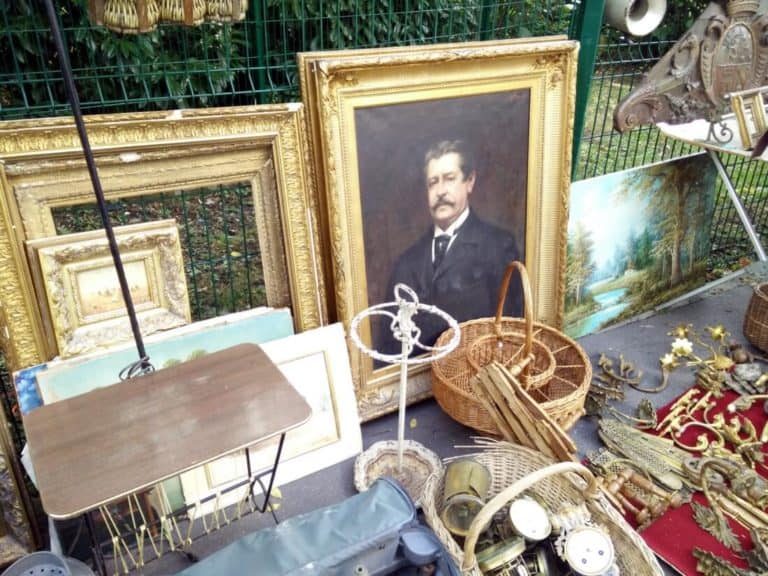

The flea markets in Paris — known locally as puces or brocantes — trace their roots back to the Middle Ages, when villagers bartered goods on the outskirts of the city. The concept has evolved since then, but not beyond recognition. Most Paris flea markets still centre on antiques and vintage merchandise. Some also mix old and new. And nearly all of them open on weekends, with a few — notably Saint-Ouen and Montreuil — extending into Monday.
Four of Paris’s major flea markets sit on the edge of the Boulevard Périphérique, the ring road that marks the city’s boundary. A fifth — the Bouquinistes — runs along the banks of the Seine in the very heart of the city. Here are all five, with practical details and honest assessments of what each is good for.
1. Puces de Saint-Ouen (Clignancourt) — Porte de Clignancourt
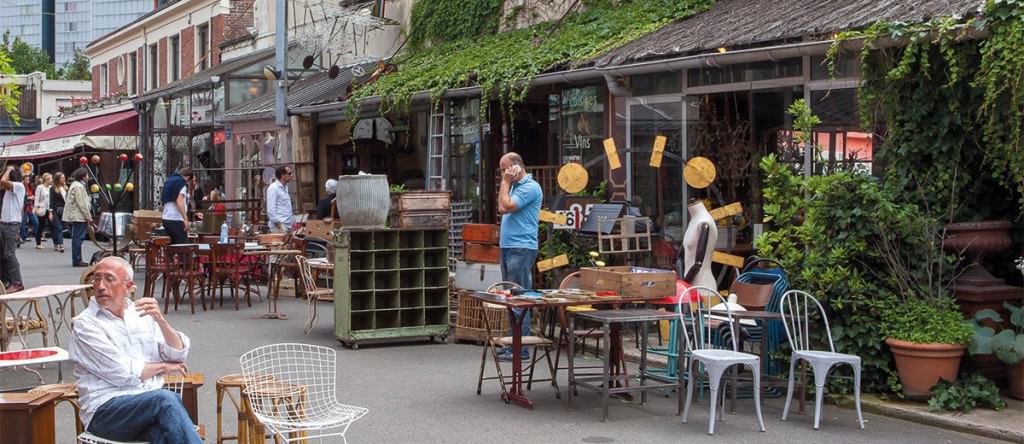
The Puces de Saint-Ouen is the largest and oldest flea market in Paris. Founded in the early 19th century, it now covers more than 70,000 square metres across 12 distinct markets straddling the 18th arrondissement and the suburb of Saint-Ouen. First-timers often find it overwhelming. The scale is, in fact, closer to a neighbourhood than a market. If time is short, head straight to Rue des Rosiers — it runs through the heart of the complex and hosts most of the major dealers.
The range is extraordinary. Baroque furniture, Art Nouveau objects, antique mirrors, tapestries, religious sculptures, 15th-to-19th-century weaponry, vintage garments, old photographs, vinyl records, second-hand books — it’s all here. Saint-Ouen is the one Paris flea market where credit cards are accepted at many stalls, which makes it particularly convenient for visitors arriving without cash.
📍 How to get there: Métro Porte de Clignancourt (line 4)
📅 Days: Friday, Saturday, Sunday, Monday
🕐 Hours: Friday 08:00–12:00 | Saturday 09:00–18:00 | Sunday 10:00–18:00 | Monday 11:00–17:00
🌐 Website: marcheauxpuces-saintouen.com
2. Puces de la Porte de Vanves — Porte de Vanves
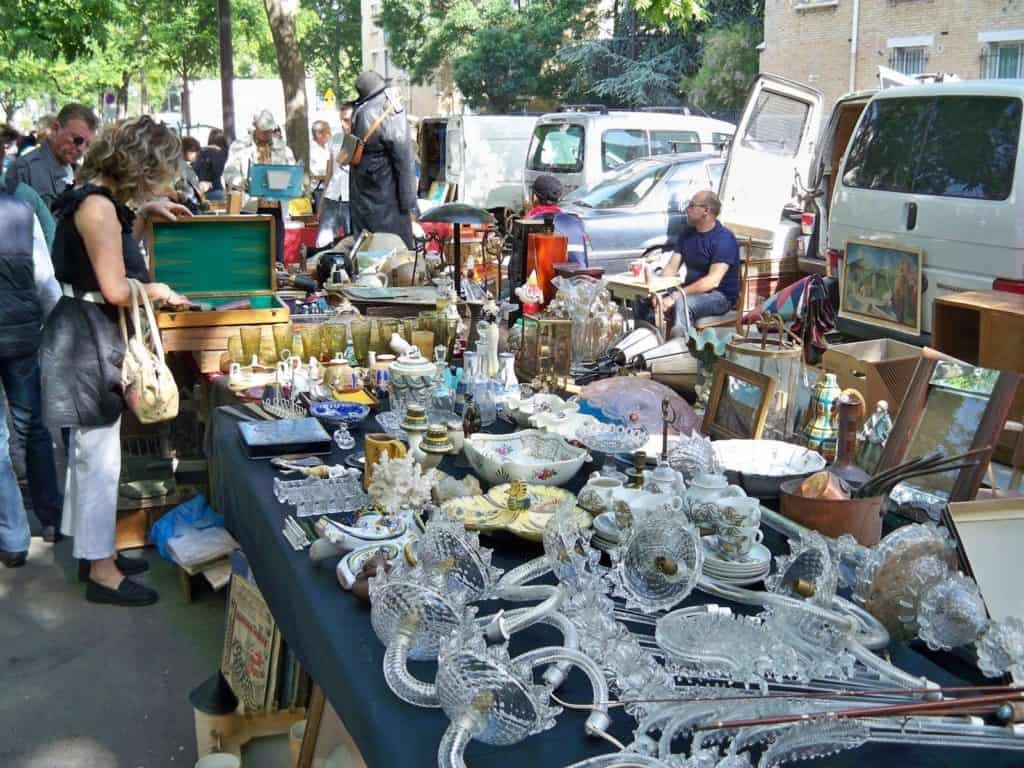
Less famous than Saint-Ouen, the Porte de Vanves flea market is, for many regulars, their favourite. It occupies just two streets — Avenue Marc Sangnier and Avenue Georges Lafenestre — yet manages around 350 stalls selling quality goods at genuinely attractive prices. More than any other market in the city, Vanves has preserved the original spirit of the Parisian brocante.
The selection ranges from Art Déco furniture and French decor from the 1900s to the 1970s, to vintage clothing, old paintings, bronze sculptures, silverware, crystal chandeliers, tribal art, and jewelry. American and Japanese visitors are regulars here — a sign that Vanves has a well-established reputation beyond France. However, it closes early: by 1pm the stalls are packing up, so an early arrival is essential.
📍 How to get there: Métro Porte de Vanves (line 13)
📅 Days: Saturday and Sunday
🕐 Hours: 07:00–13:00
🌐 Website: pucesdevanves.fr
3. Puces de Montreuil — Porte de Montreuil
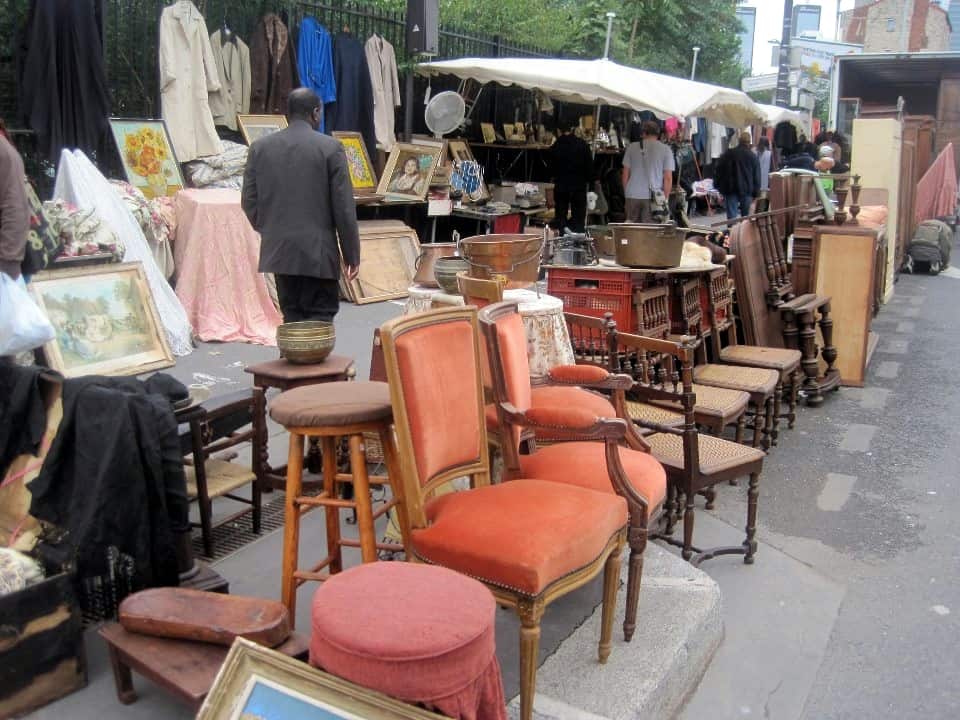
The Puces de Montreuil is less glamorous than Vanves or Saint-Ouen — and that, in fact, is the point. Founded in 1860, it is one of the oldest flea markets in Paris. With around 500 open-air stalls, it feels closer to a giant garage sale than a curated antique fair. Because it sits in a less touristy corner of the city, it draws fewer visitors. As a result, the prices are lower and the bargaining is easier.
Most aisles at Montreuil are dedicated to second-hand clothing, old furniture, spare parts, tools, and hardware. That said, genuine finds do surface from under the makeshift tables if you’re willing to dig. For high-end antiques and French flea market decor, however, Clignancourt or Vanves will serve you better.
📍 How to get there: Métro Porte de Montreuil (line 9 or tramway T3B)
📅 Days: Saturday, Sunday, Monday
🕐 Hours: 07:00–19:30
🌐 Website: paris.fr
4. Brocante de la Place d’Aligre — Faubourg Saint-Antoine
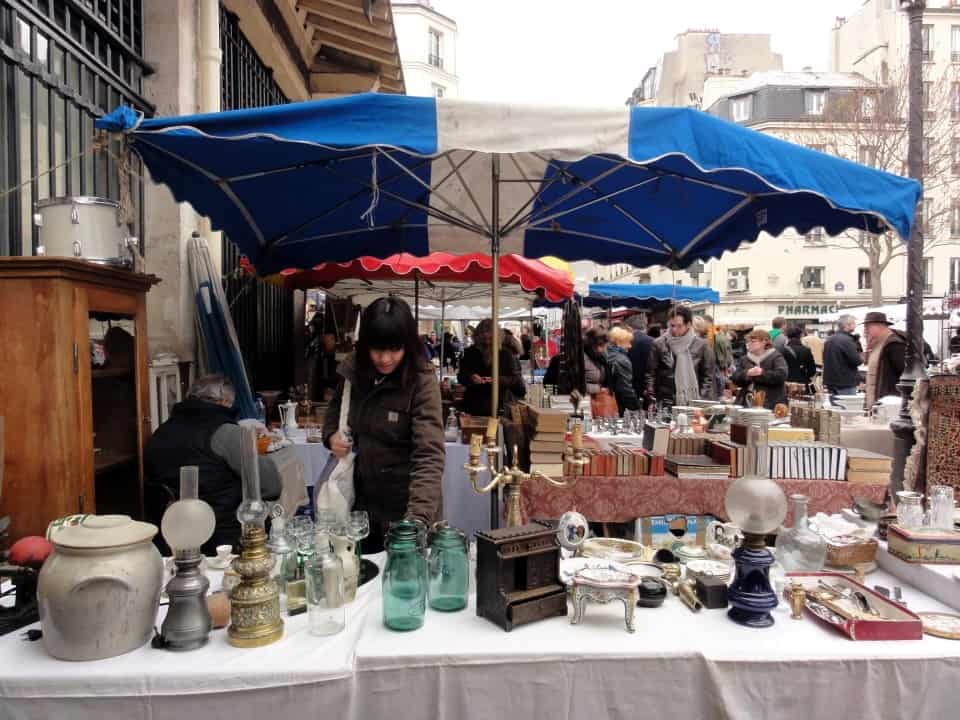
The Place d’Aligre market is the smallest on this list — around 40 professional exhibitors in a quiet, sunlit square in the Faubourg Saint-Antoine. It is, nevertheless, one of the most atmospheric. The setting has a provincial quality that feels removed from tourist Paris, and the vendors are generally eager to do business. Prices are fair; the atmosphere is relaxed.
The key tip here: don’t limit yourself to what’s displayed at eye level. Rummage through the boxes on the ground — that’s where the best deals tend to hide. The market is also steps away from the Marché d’Aligre food market, which makes the combination an ideal Tuesday-to-Sunday morning in the 12th arrondissement.
📍 How to get there: Métro Ledru-Rollin (line 8)
📅 Days: Tuesday to Sunday
🕐 Hours: 08:00–14:00
🌐 Website: pucesaligre.unblog.fr
5. Les Bouquinistes — Along the Seine
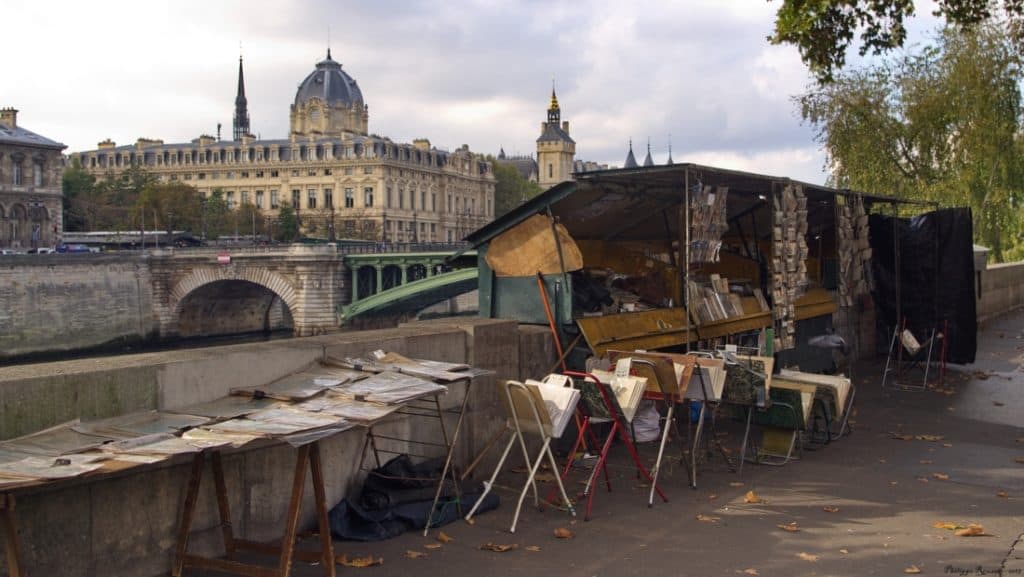
Les Bouquinistes are the 240 second-hand booksellers who have lined the banks of the Seine since the 16th century. They settled in their current form in 1859. Today, their 900 green wooden boxes stretch for three kilometres along both banks — from Pont Marie to Quai du Louvre on the right bank, and from Quai de la Tournelle to Quai Voltaire on the left. With more than 300,000 books on offer, it is the longest open-air library in the world.
Beyond books, the stalls also carry old newspapers, antique posters (both original and reissued), stamps, and trading cards. The Bouquinistes operate several days a week, weather permitting. They are, in short, less a flea market than a cultural institution — and one of the most distinctive shopping experiences Paris offers.
📍 Where: Right bank: Pont Marie to Quai du Louvre | Left bank: Quai de la Tournelle to Quai Voltaire
📅 Days: Monday–Saturday and Sunday (weather permitting)
🕐 Hours: Monday–Saturday 09:30–19:00 | Sunday 13:00–18:00
🌐 Website: cql.fr/bouquinistes
Book Your Stay in Paris
The best Paris flea markets open early and close by early afternoon. Staying nearby means you can be at the stalls before the crowds arrive — and have somewhere to drop off your finds before heading back for a second look.
Tips for Visiting Flea Markets in Paris
Paris flea markets get busy between 10am and noon on weekends. A little preparation goes a long way. Here’s what experienced visitors do differently:
- Arrive early. The best pieces go before most visitors have finished breakfast. At Vanves, serious buyers are there at 7am.
- Dress down. Vendors size up customers quickly. Comfortable, understated clothing signals you know what you’re doing — and improves your starting position for negotiation.
- Bring cash. Most vendors don’t accept cards. The exception is Saint-Ouen, where many dealers do. Even there, cash gives you more leverage.
- Use public transport. Parking near any of the ring-road markets is difficult. The Métro is faster and cheaper.
- Watch your belongings. Pickpockets are active at busy markets, particularly Saint-Ouen. Keep bags in front of you and avoid back pockets.
How to Haggle at a Paris Flea Market
Price tags are rare at Parisian flea markets. Vendors often set prices on the spot, and those prices are frequently adjusted based on how a customer looks and where they seem to be from. Overdressed visitors who don’t speak a word of French routinely pay 25–30% more than they need to. The gap between tourist price and local price is real — and it’s entirely negotiable.

The basic approach: decide your maximum price before you ask the vendor, then open below it with a smile. Silence works in your favour — let the pause sit. Showing mild disinterest in the item often prompts the vendor to move first. Most will accept a discount of up to 30% without much resistance. One important rule, however: if you name a price and the vendor accepts it, you are expected to buy. Walking away after an agreed price is considered bad form.
Learning a few words of French helps more than most visitors expect. It signals respect and immediately changes the dynamic. We recommend starting with these 10 French idioms you’ll actually hear at the flea market. For a deeper guide, see our full article on shopping smart at French flea markets.
FAQ: Flea Markets in Paris
What is the best flea market in Paris?
It depends on what you’re looking for. For scale and variety, Saint-Ouen (Clignancourt) is the obvious answer — it’s the largest antique market in Europe. For quality at reasonable prices and an authentic atmosphere, many regulars prefer Vanves. For a bargain-hunting experience with fewer tourists, Montreuil is the better choice.
When is the best time to visit Paris flea markets?
Early morning, before 10am. The best items sell fast, and the crowds arrive mid-morning. At Vanves in particular, serious collectors are browsing by 7am. Additionally, weekday visits to Saint-Ouen (open Friday and Monday) offer a quieter, more relaxed experience than the weekend rush.
Do Paris flea markets accept credit cards?
Most vendors at Paris flea markets only accept cash. Saint-Ouen is the exception — many of its established dealers do accept cards. At all other markets, bring enough euros before you arrive. ATMs near the markets can have long queues on busy weekend mornings.
Is it safe to visit Paris flea markets?
Generally, yes. However, pickpocketing is a known issue at busy markets — especially Saint-Ouen and Montreuil. Keep bags zipped and in front of you, avoid keeping valuables in back pockets, and stay aware of your surroundings in crowded aisles. The markets themselves are legitimate and well-established; the risk is no different from any busy public space in a major city.
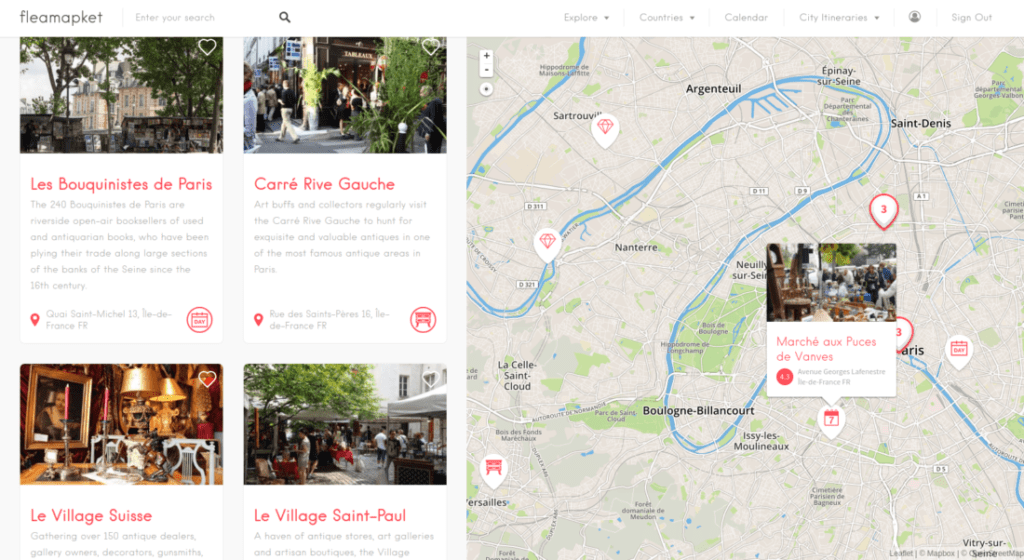
Explore Paris Flea Markets on a Map
You can discover all the best flea markets and antique fairs in Paris on our interactive map — including the city’s major antique districts and upcoming fair dates.